
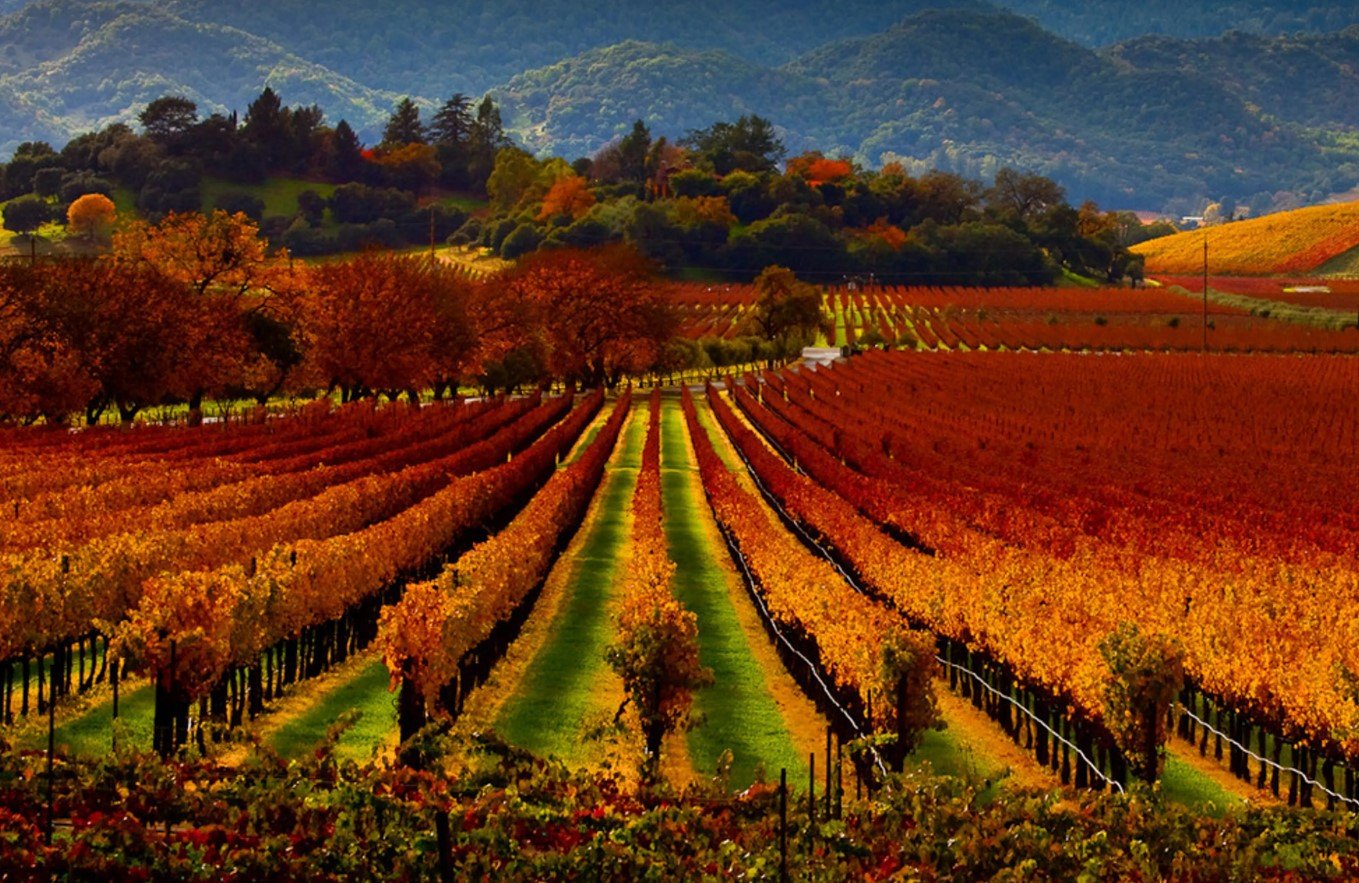
Napa Valley is one of California’s best-known agricultural and cultural landscapes, located north of San Francisco in Napa County. Although widely associated with wine, the valley is more than a collection of vineyards. Its fertile floor, surrounding mountains, Mediterranean climate, historic communities, and carefully managed agricultural land give it a distinct identity within Northern California.
The valley stretches through a series of communities, including Napa, Yountville, St. Helena, and Calistoga. Visitors come for its vineyards and wineries, but the area also offers scenic countryside, historic sites, restaurants, art, cycling routes, hot springs, and outdoor experiences.
Napa Valley Quick Facts
| Fact | Details |
|---|---|
| Location | Napa County, Northern California |
| Country | United States |
| Region | North Bay, California |
| Elevation | Valley floor generally around 50–500 ft (15–152 m) |
| Famous For | Wine, vineyards, agriculture and culinary tourism |
| Climate | Mediterranean |
| Main River | Napa River |
| Best Months | August to October for harvest; spring and early summer for mild weather |
| Nearby City/Town | Napa, Yountville, St. Helena, Calistoga |
Where Is Napa Valley?
Napa Valley is in Northern California, approximately 50 miles northeast of San Francisco. It occupies much of the Napa River watershed and runs northward through Napa County toward Calistoga.
The valley is bordered by mountain ranges, including the Mayacamas Mountains to the west and the Vaca Range to the east. Napa is the largest city in the southern part of the valley, while Yountville, St. Helena, and Calistoga are important communities farther north.
Geography and Landscape
Napa Valley is a relatively narrow agricultural valley shaped by the Napa River and surrounded by mountain terrain. Its landscape includes vineyards, oak woodlands, grasslands, creeks, hillsides, and volcanic and sedimentary soils.
The valley’s geography varies considerably from south to north. The southern portion near San Pablo Bay is cooler and more influenced by marine air, while northern areas around Calistoga are generally warmer. Elevation also changes across the valley, creating different growing conditions between the valley floor and hillside vineyards.
The Napa River runs through the valley before reaching the tidal waters of San Pablo Bay. This river system has played an important role in both the valley’s agricultural development and its modern environmental conservation efforts.
History of Napa Valley
The Napa Valley region has a long Indigenous history, particularly associated with the Wappo people, who lived throughout parts of the upper Napa Valley before and during the arrival of European settlers. Indigenous communities used the area’s plants, waterways, and wildlife as important resources.
Mexican-era settlement and later American migration changed the region substantially during the nineteenth century. Vineyards were established in Napa Valley in the 1800s, with George Yount planting some of the area’s earliest commercial vines. Charles Krug established a winery near St. Helena in 1861, helping develop Napa’s early wine industry.
The region experienced periods of growth and difficulty as vineyards expanded. Prohibition in the United States severely disrupted wine production during the early twentieth century, but the industry gradually recovered afterward.
Napa Valley’s international reputation grew dramatically in the second half of the twentieth century. The 1976 Judgment of Paris wine competition, in which California wines performed exceptionally well against respected French wines, helped establish Napa as a major global wine-producing region.
How Was Napa Valley Formed?
Napa Valley’s landscape developed through a combination of tectonic activity, volcanic processes, erosion, sedimentation, and changes in drainage over geological time. The surrounding mountains contain both volcanic and sedimentary rocks, while the valley floor accumulated sediments transported by rivers and streams.
The resulting mixture of soils and drainage conditions is one reason Napa Valley contains numerous distinct vineyard environments. Geological differences between locations help create variations in growing conditions across the relatively compact region.
Napa Valley Weather Throughout the Year
Napa Valley has a Mediterranean climate characterized by warm, generally dry summers and cooler, wetter winters. Conditions vary from south to north and between the valley floor and surrounding hills.
January to March
Winter is cool and relatively wet, with most of the area’s annual rainfall occurring during this period. Daytime temperatures are generally mild, while nights can be chilly. By March, temperatures begin rising and the landscape becomes increasingly green.
April to June
Spring brings mild to warm days and decreasing rainfall. Temperatures typically become more comfortable for outdoor activities, while vineyards enter an active growing period. Morning fog can still occur, particularly in the southern valley.
July to September
Summer is generally warm, dry, and sunny. Temperatures are often higher inland around Calistoga than in southern Napa Valley. Harvest activity begins toward the end of summer and continues into early autumn.
October to December
October remains relatively warm, although temperatures begin declining later in the season. Autumn is closely associated with grape harvest, while November and December bring cooler conditions and the return of more frequent rainfall.
Best Weather for Visiting Napa Valley
Spring and early autumn offer a good balance of mild weather and outdoor activities. August through October is particularly popular because of harvest season, although this period is also among the busiest times of year.
Things to Do in Napa Valley
- Wine tasting: Visit wineries and tasting rooms to sample wines produced throughout the valley.
- Cycling: Explore rural roads and vineyard landscapes by bicycle or guided cycling tour.
- Hot-air ballooning: Early-morning balloon rides provide aerial views of vineyards and surrounding hills.
- Culinary experiences: Enjoy restaurants, food-and-wine pairings, cooking experiences, and local farm products.
- Hiking: Trails in nearby hills and parks offer opportunities to explore the region beyond the vineyards.
- Spa and wellness: Calistoga is particularly known for mineral hot springs and spa experiences.
- Scenic sightseeing: Drive between the valley’s historic towns, vineyards, and mountain viewpoints.
Famous Attractions in and Around Napa Valley
Napa
The city of Napa is the valley’s southern gateway and features a revitalized downtown, restaurants, shops, riverfront areas, and cultural attractions.
Yountville
Yountville is a small community known for its restaurants, culinary reputation, galleries, gardens, and access to nearby vineyards.
St. Helena
St. Helena combines historic architecture and a walkable town center with numerous wineries, restaurants, and agricultural properties.
Calistoga
At the northern end of the valley, Calistoga is known for hot springs, spas, historic sites, and access to nearby mountain landscapes.
Castello di Amorosa
This winery near Calistoga is designed as a medieval-style castle and has become one of the valley’s recognizable visitor attractions.
Napa Valley Wine Train
The Napa Valley Wine Train offers a rail-based way to experience portions of the valley while combining scenic views with dining and wine-focused experiences.
Bale Grist Mill State Historic Park
Located near St. Helena, this historic site preserves a nineteenth-century water-powered grist mill and provides insight into Napa Valley’s agricultural past.
Robert Louis Stevenson State Park
Situated on Mount Saint Helena, this state park offers hiking and mountain scenery above the northern Napa Valley.
Wildlife and Nature
Napa Valley’s natural environment includes oak woodlands, grasslands, riparian corridors, vineyards, creeks, and surrounding mountain habitats. The Napa River and its tributaries provide important habitat for aquatic and riparian species.
Wildlife in the wider valley and surrounding countryside includes black-tailed deer, coyotes, foxes, raccoons, rabbits, and numerous bird species. Native oak trees remain an important component of the landscape, while protected hillsides and open spaces help preserve habitat outside developed agricultural areas.
Conservation efforts increasingly focus on protecting waterways, restoring riparian habitat, maintaining wildlife corridors, and balancing agricultural activity with the region’s natural ecosystems.
How to Reach Napa Valley
Napa Valley is primarily reached by road. From San Francisco, visitors can generally drive across the Bay Area and approach the valley through the Napa or American Canyon area. Interstate 80 provides connections toward the region, while California State Route 29 and the Silverado Trail are major north-south routes within Napa Valley.
The nearest major commercial airports include San Francisco International Airport and Oakland International Airport. Sacramento International Airport can also be practical depending on the traveler’s starting point.
There is no major passenger rail line running directly through the entire valley, but regional bus services and private tours provide alternatives to driving. The Napa Valley Wine Train operates as a tourism-focused rail experience rather than conventional intercity transportation.
Where to Stay Near Napa Valley
Napa, Yountville, St. Helena, and Calistoga provide the main accommodation bases. Options range from hotels and boutique properties to resorts, bed-and-breakfasts, vacation rentals, and spa accommodations.
Napa is convenient for visitors interested in restaurants, downtown attractions, and access to the southern valley. Yountville and St. Helena are useful for travelers focusing on central Napa Valley, while Calistoga provides a quieter northern base with hot springs and mountain surroundings.
Why Is Napa Valley Famous?
Napa Valley is famous primarily for its internationally recognized wine industry, but its reputation also reflects its Mediterranean climate, distinctive agricultural landscape, culinary culture, historic communities, and scenic mountain setting. Its transformation from a regional farming area into one of the world’s most prominent wine destinations is a major part of its identity.
Napa Valley FAQs
Where is Napa Valley located?
Napa Valley is in Napa County in Northern California, about 50 miles northeast of San Francisco. It extends from the southern Napa area toward Calistoga in the north.
What is Napa Valley famous for?
It is best known for wine production and vineyards, along with its restaurants, agricultural landscapes, resorts, hot springs, and scenic countryside.
What is the weather like in Napa Valley?
The valley has a Mediterranean climate with wet, cooler winters and warm, dry summers. Conditions vary between southern and northern parts of the valley.
What are the best months to visit Napa Valley?
Spring and autumn are popular for comfortable weather. August through October is especially busy because it overlaps with the grape harvest period.
What can you do in Napa Valley?
Visitors can enjoy wine tasting, cycling, hiking, balloon rides, restaurants, spas, scenic drives, and cultural attractions.
How do you reach Napa Valley?
Most travelers arrive by car from the San Francisco Bay Area or Sacramento region. San Francisco and Oakland airports are among the nearest major international airports.
Does Napa Valley get snow?
Snow is extremely uncommon on the valley floor. Winter precipitation generally falls as rain, although higher surrounding elevations can experience colder conditions.
Which towns are in Napa Valley?
Major communities include Napa, Yountville, St. Helena, and Calistoga, each offering different accommodation, dining, and visitor experiences.
Final Thoughts
Napa Valley combines a distinctive Mediterranean climate, fertile agricultural land, mountain scenery, historic communities, and a globally recognized wine tradition. Whether visiting for vineyards, food, outdoor activities, history, or the landscape itself, the valley offers a varied experience beyond its famous wine industry.
For More Visit ValleyTaxNV
