
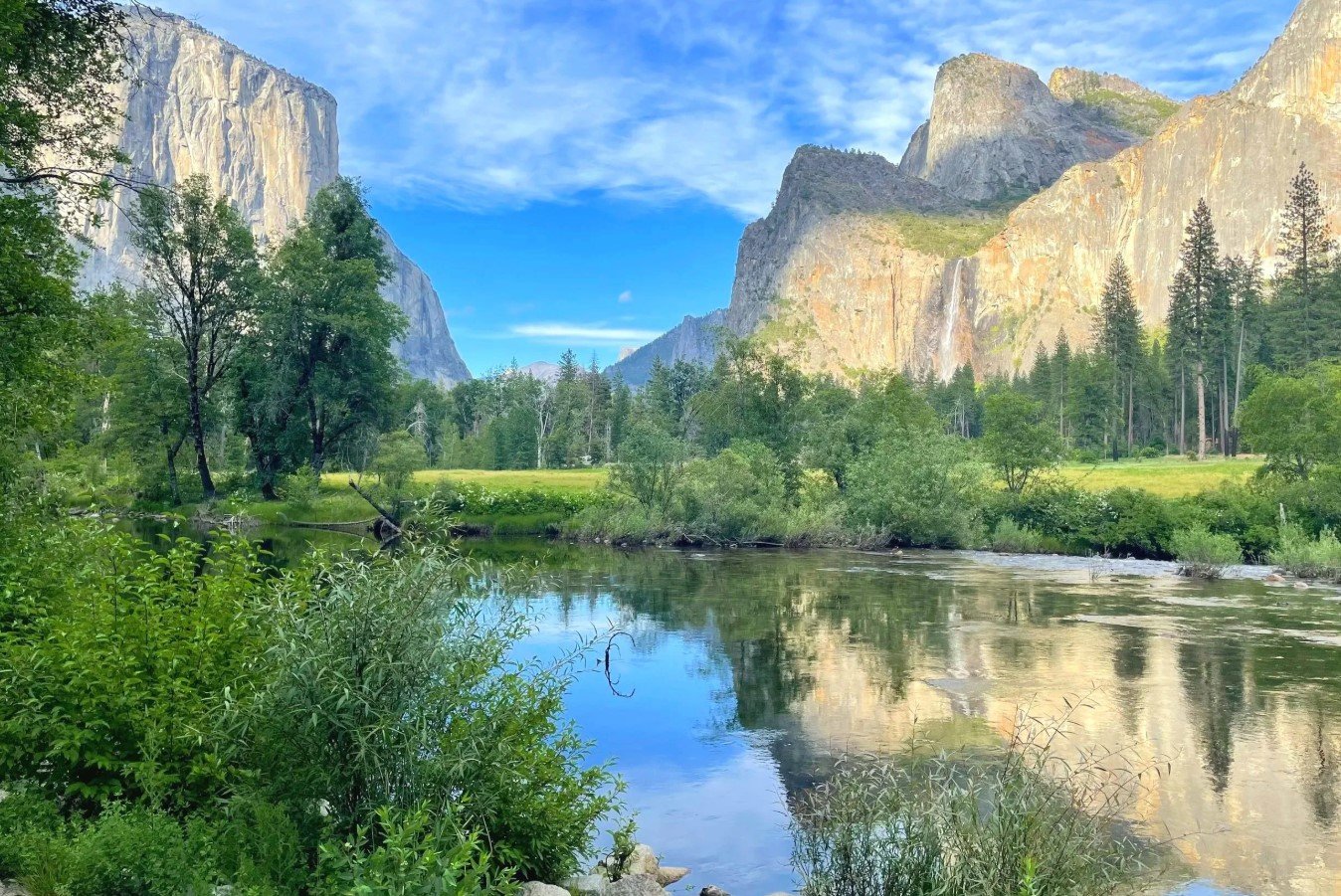
Yosemite Valley is the best-known valley within Yosemite National Park in California’s Sierra Nevada. Its combination of massive granite cliffs, waterfalls, meadows, forests, and the Merced River has made it one of the most recognizable mountain landscapes in the United States. The valley is also a place where geology and human history are closely connected, with thousands of years of Indigenous presence followed by exploration, tourism, and conservation.
Today, Yosemite Valley is the main visitor center of the national park and provides access to some of Yosemite’s most famous landmarks. Its scenery changes dramatically through the seasons, from snow and high-flow waterfalls in colder months to warm summer days and colorful autumn vegetation.
Yosemite Valley Quick Facts
| Fact | Details |
|---|---|
| Location | Yosemite National Park, eastern California |
| Country | United States |
| Region | Sierra Nevada |
| Valley Elevation | About 4,000 feet (1,220 m) |
| Famous For | Granite cliffs, waterfalls, meadows and glacial scenery |
| Climate | Mountain Mediterranean |
| Main River | Merced River |
| Best Months | Generally April to October |
| Nearby Towns | Yosemite West, El Portal, Mariposa |
Where Is Yosemite Valley?
Yosemite Valley is located in the central Sierra Nevada of eastern California, within Yosemite National Park. The valley lies in Mariposa County and is surrounded by the larger mountain landscape of the Sierra Nevada.
The closest communities include El Portal, Yosemite West, and Mariposa, while larger regional cities such as Fresno provide additional transportation and services. The valley itself is reached through several park roads, making it accessible by road throughout the year, although winter conditions can affect driving requirements.
Geography and Landscape
Yosemite Valley is a deep, approximately seven-mile-long valley with a relatively flat floor surrounded by steep granite walls. Its landscape includes forests, open meadows, the Merced River, prominent cliffs, and numerous waterfalls.
El Capitan rises nearly 3,000 feet above the valley floor and forms one of its most recognizable granite walls. Other major formations include Half Dome, Sentinel Rock, and the Three Brothers. Yosemite Falls, Bridalveil Fall, and several smaller waterfalls descend from the surrounding cliffs and hanging valleys.
The valley’s elevation is around 4,000 feet, while the wider Yosemite region climbs to more than 13,000 feet. This substantial elevation variation creates different habitats and weather conditions across the park.
History of Yosemite Valley
People have lived in the Yosemite region for thousands of years. Indigenous communities developed detailed knowledge of the valley’s plants, animals, waterways, and seasonal conditions. The Ahwahneechee are particularly associated with Yosemite Valley, while several traditionally associated tribes continue to have connections to the wider Yosemite landscape.
American settlers and explorers entered the valley during the nineteenth century, and increasing public interest soon transformed Yosemite into a destination for visitors. The Yosemite Grant of 1864 transferred the valley and nearby lands to California for preservation and public use, establishing an important early step in American conservation history.
Yosemite National Park was established in 1890. Later conservation efforts helped protect the valley’s natural scenery while Yosemite became an influential model for the national park movement. The park was designated a UNESCO World Heritage Site in 1984.
How Was Yosemite Valley Formed?
Yosemite Valley developed through a combination of tectonic uplift, river erosion, weathering, and repeated glaciation. Rivers initially cut a narrower canyon into the Sierra Nevada’s granitic bedrock. During ice ages, massive glaciers moved through the canyon, widening and deepening it into the broad U-shaped valley seen today.
As the glaciers retreated around 15,000 years ago, tributary valleys were left elevated above the main valley floor, helping create the waterfalls for which Yosemite is famous. Rockfall, erosion, and other geological processes continue to modify the valley today.
Yosemite Valley Weather Throughout the Year
Yosemite Valley has a mountain climate with wet winters, dry summers, and considerable temperature variation. The National Park Service’s 1991–2020 averages show how conditions change throughout the year.
January to March
Winter is cool and relatively wet. Average daytime highs range from about 48°F (9°C) in January to 57°F (14°C) in March, while nighttime temperatures can fall below freezing. Rain and snow are both possible in the valley.
April to June
Spring brings steadily warmer weather and increasing waterfall flows. Average highs rise from about 63°F (17°C) in April to 81°F (27°C) in June. April and May can still bring rain or late-season snow, particularly during colder weather systems.
July to September
Summer is generally warm, dry, and sunny. Average highs are around 89°F (32°C) in July and August before easing to about 83°F (28°C) in September. Evenings are considerably cooler, making early mornings and late afternoons comfortable for many outdoor activities.
October to December
Autumn begins pleasantly, with an average October high near 71°F (22°C), before temperatures fall sharply in November and December. Precipitation increases during late autumn, and winter storms can bring snow to the valley.
Best Weather for Visiting Yosemite Valley
For many visitors, late spring through early autumn offers the most favorable combination of accessible roads, pleasant daytime temperatures, and abundant outdoor opportunities. April through June is particularly attractive for waterfall viewing, while September and October often provide cooler conditions and autumn scenery.
Things to Do in Yosemite Valley
- Hiking: Trails range from easy valley-floor walks to demanding routes leading toward higher viewpoints.
- Photography: Sunrise, sunset, waterfalls, meadows, and granite formations provide excellent landscape photography opportunities.
- Rock climbing: Yosemite is internationally recognized for climbing, especially on major granite walls such as El Capitan.
- Cycling: Bicycles provide a convenient way to move around portions of the valley and avoid some vehicle congestion.
- Wildlife watching: Early mornings and quieter areas can offer opportunities to observe birds and mammals.
- Scenic sightseeing: Valley roads, viewpoints, and meadows make it possible to experience the landscape without undertaking a strenuous hike.
- Camping: Several developed campgrounds provide opportunities to stay close to the valley’s natural environment, subject to reservations and seasonal availability.
Famous Attractions in and Around Yosemite Valley
El Capitan
This enormous granite monolith dominates the northern side of the valley and is one of the world’s most famous rock-climbing landmarks.
Half Dome
Half Dome’s distinctive rounded granite profile is one of Yosemite’s defining landmarks and can be viewed from numerous locations in and around the valley.
Yosemite Falls
Yosemite Falls is one of North America’s tallest waterfalls and consists of Upper Yosemite Fall, the middle cascades, and Lower Yosemite Fall.
Bridalveil Fall
Located near the western entrance to Yosemite Valley, Bridalveil Fall drops from a hanging valley and is among the first major waterfalls many visitors encounter.
Tunnel View
Tunnel View provides a classic panorama of Yosemite Valley, including El Capitan, Half Dome, Bridalveil Fall, and the valley floor.
Sentinel Rock
This prominent granite formation rises above the southern side of the valley and provides an important part of the classic Yosemite landscape.
Yosemite Chapel
Built in 1879, Yosemite Chapel is a historic building in Yosemite Valley and one of the area’s notable cultural landmarks.
Wildlife and Nature
Yosemite Valley contains a mixture of riparian habitat, meadows, oak woodland, conifer forest, and granite environments. The Merced River provides an important water corridor through the valley, while surrounding forests support a wide range of species.
Black bears, mule deer, coyotes, bobcats, gray foxes, and numerous bird species occur in Yosemite National Park. Plant communities vary with elevation and moisture, with pine, fir, cedar, oak, and other species contributing to the valley’s diverse ecosystem. Conservation programs focus on protecting wildlife, water resources, vegetation, and the valley’s broader ecological processes.
How to Reach Yosemite Valley
Yosemite Valley can be reached by car throughout the year. Highways 41, 140, and Highway 120 from the west provide major approaches. Winter conditions can require tire chains, particularly from autumn through early spring.
Public transportation is also available. YARTS connects Yosemite with surrounding communities, while Amtrak services can be combined with regional bus connections. Once in the valley, the free Yosemite Valley shuttle provides transportation between major stops, lodging areas, campgrounds, and trailheads.
Where to Stay Near Yosemite Valley
The most convenient accommodation is within Yosemite National Park, where visitors can find hotels, lodges, cabins, and campgrounds. Reservations are especially important during busy periods.
Outside the valley, El Portal is one of the closest communities and offers accommodation and services near the park entrance. Mariposa, Yosemite West, and other nearby communities provide additional hotels, vacation rentals, cabins, and guesthouses for travelers who prefer to stay outside the park.
Why Is Yosemite Valley Famous?
Yosemite Valley is famous for its exceptional concentration of granite cliffs, waterfalls, meadows, forests, and glacial landforms. Its distinctive combination of natural scenery, geological importance, Indigenous and cultural history, and long-standing conservation significance has made it one of America’s best-known mountain valleys.
Yosemite Valley FAQs
Where is Yosemite Valley located?
Yosemite Valley is in Yosemite National Park in California’s central Sierra Nevada, within the eastern part of Mariposa County.
What is Yosemite Valley famous for?
It is renowned for granite landmarks such as El Capitan and Half Dome, major waterfalls, meadows, forests, and its glacially carved landscape.
What is the weather like in Yosemite Valley?
The valley has wet winters and dry summers. Summer daytime temperatures are commonly warm, while winter can bring freezing temperatures, rain, and snow.
What are the best months to visit Yosemite Valley?
April through October generally provides favorable conditions, although the ideal month depends on whether visitors prioritize waterfalls, warm weather, or autumn scenery.
What can you do in Yosemite Valley?
Popular activities include hiking, photography, rock climbing, cycling, sightseeing, wildlife observation, and camping.
How do you reach Yosemite Valley?
The valley is accessible by several major roads, including Highways 41, 140, and 120 from the west. Public transportation is also available through YARTS and other connections.
Does Yosemite Valley get snow?
Yes. Winter storms can bring snow to Yosemite Valley, although snowfall is much more persistent and substantial at higher elevations within Yosemite National Park.
Final Thoughts
Yosemite Valley combines dramatic geology, waterfalls, forests, wildlife, cultural history, and accessible outdoor recreation in a remarkably compact landscape. Its year-round character changes with the seasons, giving visitors different reasons to explore throughout the year.
For More Visit ValleyTaxNV
