
Ice skating is one of those rare skills that blends athleticism, balance, and joy into a single experience. If you’ve ever wondered how to ice skate, you’re not alone. Every year, millions of people step onto the ice for the first time—some for recreation, others for hockey, fitness, or figure skating. While it may look intimidating at first, ice skating is a learnable skill at any age with the right guidance and mindset.
This comprehensive guide explains how to ice skate for beginners, how to improve technique, skate backward, help kids learn safely, and gain confidence on the ice. Drawing from skating instructors’ best practices, sports science, and real beginner experiences, this article gives you actionable, step-by-step insights to help you skate with control and confidence.
Why Learning How to Ice Skate Is Worth It
Ice skating offers physical, mental, and social benefits that few sports can match.
• Improves balance, coordination, and core strength
• Burns calories while being low-impact on joints
• Builds confidence and focus
• Encourages social interaction and family bonding
• Enhances posture and leg strength
• Opens doors to hockey, figure skating, and speed skating
Understanding how to ice skate properly from the start reduces fear, prevents injuries, and accelerates learning.
How to Ice Skate for Beginners
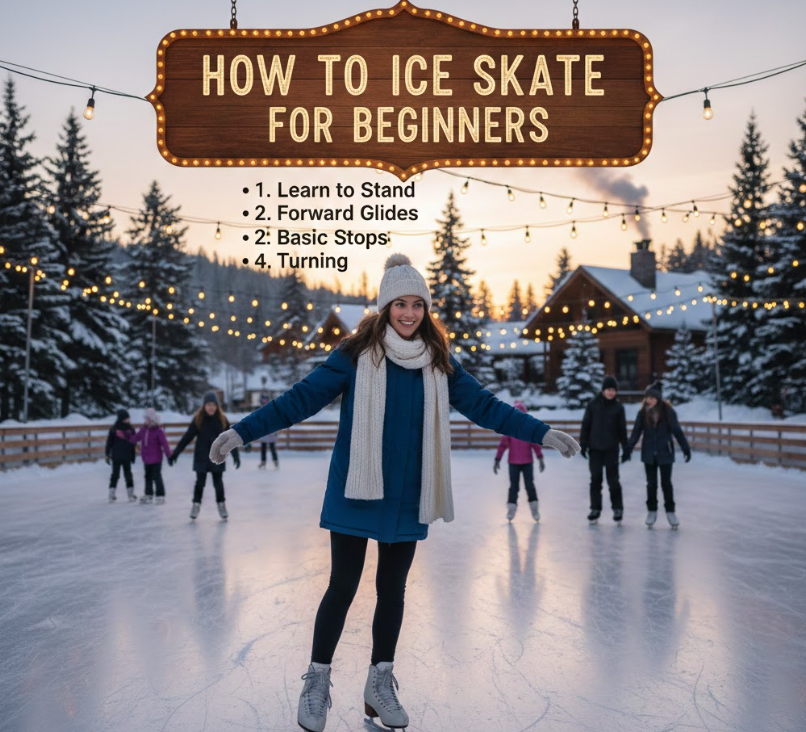
Learning how to ice skate for beginners is about mastering balance, posture, and controlled movement before speed or tricks. This stage builds the foundation for everything that follows.
Beginner Ice Skating Explained
Beginner ice skating focuses on stability and safety rather than speed. The goal is to feel comfortable standing, gliding, and stopping without panic. Most falls happen because beginners lean back or lock their legs—both of which are correctable habits.
Essential Beginner Techniques and Principles
• Proper Skating Posture
Bend your knees slightly, keep your chest upright, and lean forward just enough to feel balanced. This stance lowers your center of gravity and prevents backward falls.
• How to Stand Up on Ice
Start on one knee, place both hands on the raised knee, and push up slowly. Learning this removes fear and builds confidence immediately.
• Marching Before Gliding
Begin by lifting one foot at a time like marching. This teaches weight transfer, which is the core skill of ice skating.
• Basic Forward Glide
Push gently with one foot while gliding on the other. Short, controlled glides are better than long, fast ones.
• Using the Rink Barrier Wisely
Hold the wall for balance at first, but avoid leaning on it. Use it as a safety net, not a crutch.
• Learning to Fall Safely
Bend your knees and fall forward or sideways rather than backward. Wearing gloves and padded clothing helps beginners feel safer.
Also Read:- How to Hide Amazon Order: A Complete Privacy-Focused Guide
How to Ice Skate for the First Time
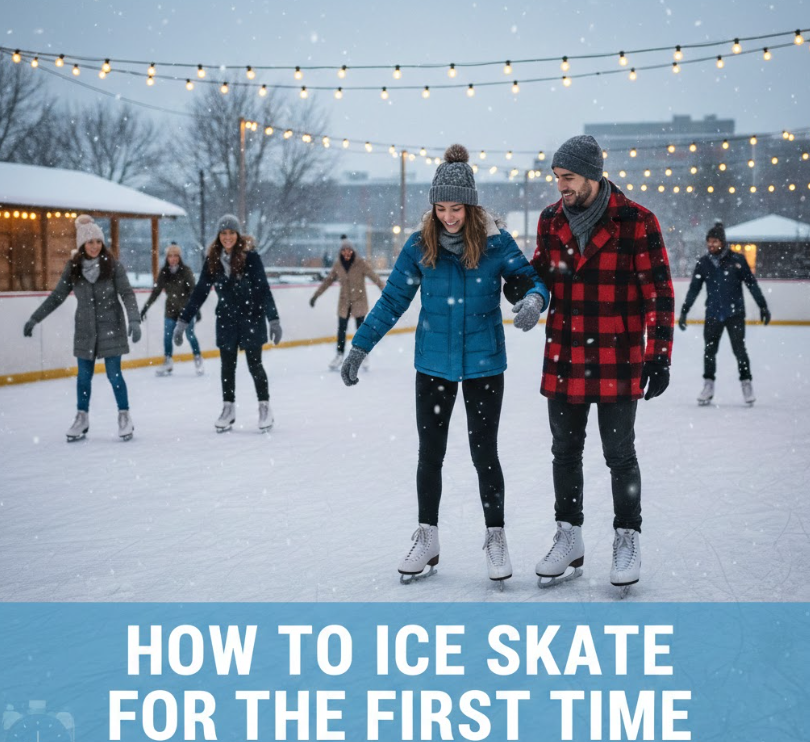
Your first skating session shapes your long-term relationship with the ice. Knowing how to ice skate for the first time reduces anxiety and helps you progress faster.
What First-Time Skaters Should Expect
First-time skaters often underestimate how much balance matters. The ice feels slippery, but it becomes manageable once you relax your body and trust small movements.
First-Time Ice Skating Success Strategies
• Choose the Right Skates
Properly fitted skates should feel snug but not painful. Loose skates make balance nearly impossible.
• Wear Appropriate Clothing
Dress warmly but flexibly. Gloves protect hands during falls, and layered clothing prevents stiffness.
• Start with Short Sessions
Thirty to forty-five minutes is ideal. Fatigue increases the risk of falls and frustration.
• Focus on Knees, Not Feet
Bending your knees improves stability more than looking down at your skates.
• Avoid Overcrowded Rinks
Busy sessions increase stress and distractions. Choose quieter times if possible.
• Accept Falling as Learning
Everyone falls—even professionals. Each fall teaches balance and control.
Also Read:- How to Fight: A Practical Guide to Overcoming Real-Life and Digital Challenges
How to Ice Skate Better
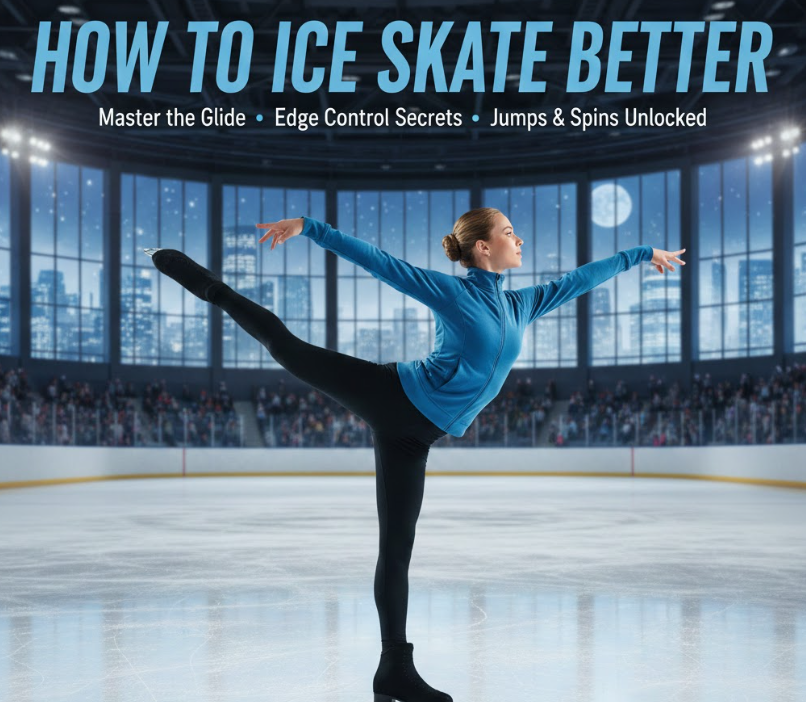
Once you’re comfortable moving forward, the next step is learning how to ice skate better by refining technique, efficiency, and confidence.
Improving Ice Skating Skills Explained
Better skating isn’t about speed—it’s about smoothness, control, and reduced effort. Advanced skills come from small adjustments in posture and movement.
Ways to Improve Ice Skating Performance
• Stronger Push Technique
Push from the side of the blade, not the toe. This creates smoother, more powerful strides.
• Edge Control Awareness
Ice skates have inside and outside edges. Learning to feel these edges improves turning and balance.
• Controlled Stops
Practice snowplow and T-stops before attempting hockey stops. Stopping builds confidence instantly.
• Upper Body Relaxation
Tense arms throw off balance. Keep shoulders relaxed and arms slightly out for stability.
• Consistent Practice Routine
Short, frequent sessions improve muscle memory faster than occasional long sessions.
• Video or Coach Feedback
Seeing your posture or getting expert input accelerates improvement dramatically.
Also Read:- How to Find Formal Charge: A Complete Chemistry Guide for Students
How to Ice Skate Backwards
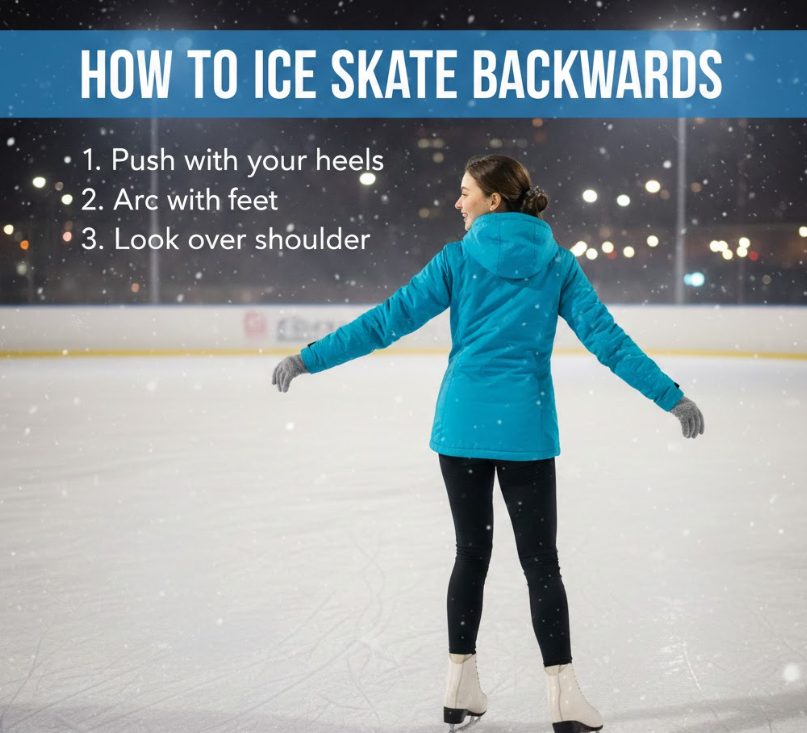
Learning how to ice skate backwards unlocks advanced control and is essential for hockey and figure skating.
Backward Skating Fundamentals
Backward skating relies on pushing outward instead of backward. It feels unnatural at first but becomes intuitive with practice.
Steps to Skate Backwards Safely
• Backward V-Push Technique
Form a V shape with your skates and push outward using inside edges.
• Knee Bend Is Critical
Bent knees provide power and prevent slipping.
• Head and Chest Position
Keep your head up and chest open. Looking down causes imbalance.
• Small Controlled Movements
Short pushes are safer and more effective than long strokes.
• Practice Near the Wall
Use the rink barrier for reassurance while learning the motion.
• Learn Backward Stops Early
Stopping backward prevents collisions and builds rink awareness.
Also Read:- How to Cook Plantains: A Complete Guide for Every Cooking Method
How to Ice Skate for Kids
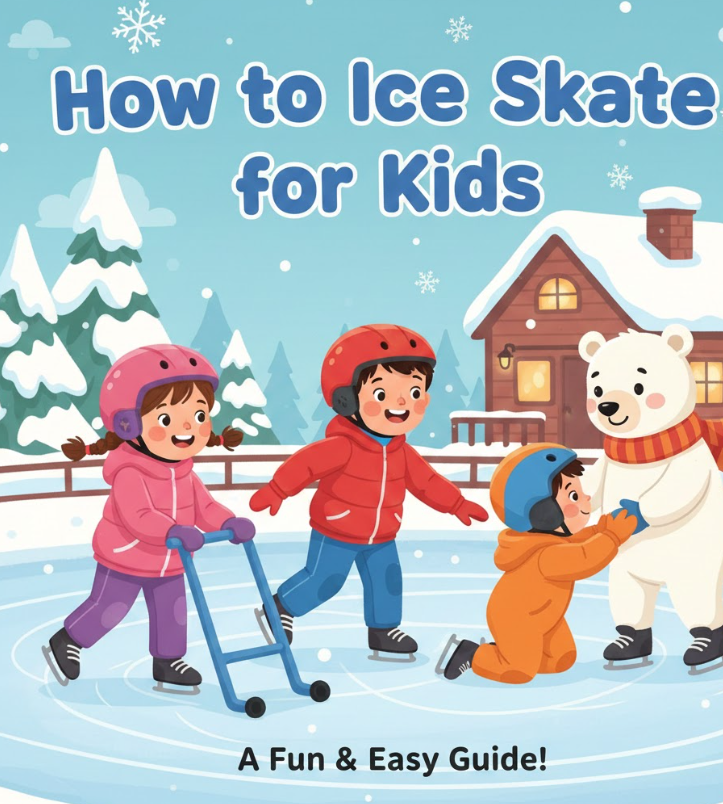
Teaching how to ice skate for kids requires patience, playfulness, and safety awareness. Children learn differently than adults.
Why Kids Learn Ice Skating Faster
Kids have a lower fear response and better natural balance. Making skating fun increases retention and confidence.
Best Practices for Teaching Kids Ice Skating
• Use Double-Runner or Adjustable Skates
These provide extra stability for younger children.
• Turn Learning into Games
Obstacle courses and follow-the-leader keep kids engaged.
• Short Attention-Friendly Sessions
Fifteen to thirty minutes is ideal for younger skaters.
• Focus on Fun Over Technique
Skills develop naturally when kids enjoy the experience.
• Protective Gear Is Essential
Helmets, gloves, and knee pads reduce injury risk.
• Positive Reinforcement Works Best
Encouragement builds confidence faster than correction.
Also Read:- How to Unhide Apps on iPhone: Complete Step-by-Step Guide
Common Ice Skating Mistakes to Avoid
• Leaning backward instead of forward
• Locking knees
• Looking down constantly
• Skating too fast too soon
• Wearing improperly fitted skates
• Skipping warm-ups
Avoiding these mistakes speeds progress and reduces injury risk.
Conclusion
Learning how to ice skate is a rewarding journey that builds physical strength, mental focus, and confidence. Whether you’re stepping onto the ice for the first time, teaching your child, or working toward smoother backward skating, success comes from proper posture, patience, and consistent practice.
Ice skating isn’t about perfection—it’s about progress. With the techniques and insights shared in this guide, you can approach the ice with confidence, safety, and excitement. Lace up, bend your knees, and enjoy the glide
FAQs
How long does it take to learn how to ice skate?
Most beginners feel comfortable after 3–5 sessions with proper instruction.
Is ice skating harder than roller skating?
Ice skating requires more balance initially, but many find it smoother once learned.
Can adults learn how to ice skate?
Absolutely. Adults often progress faster because they follow instructions carefully.
Is ice skating safe for kids?
Yes, with supervision, proper gear, and age-appropriate instruction
For More Update Visit: VallayTaxNv
