
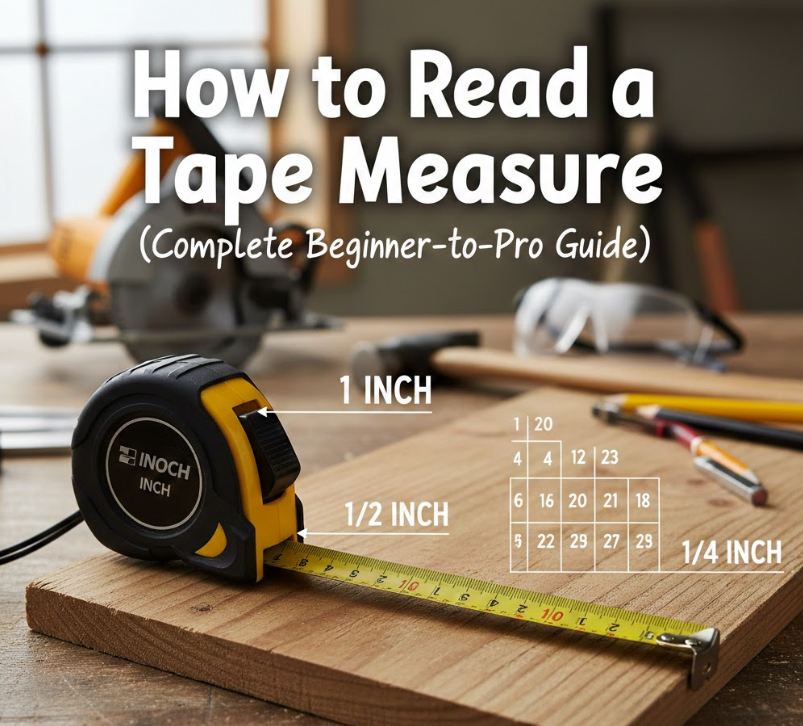
Understanding how to read a tape measure is one of those practical skills that quietly impacts everyday life. Whether you’re measuring furniture, cutting wood, sewing fabric, or working on a DIY project, a tape measure is often the first tool you reach for. Yet many people feel confused by the lines, fractions, and numbers printed on it.
This guide removes that confusion completely. You’ll learn how to read a tape measure in inches, millimeters, and centimeters, how to use a cheat sheet, and how beginners can master measurements without stress. Everything is explained clearly, with real-world examples and actionable tips you can apply immediately.
By the end of this article, reading a tape measure will feel natural—not intimidating.
How to Read a Tape Measure in Inches
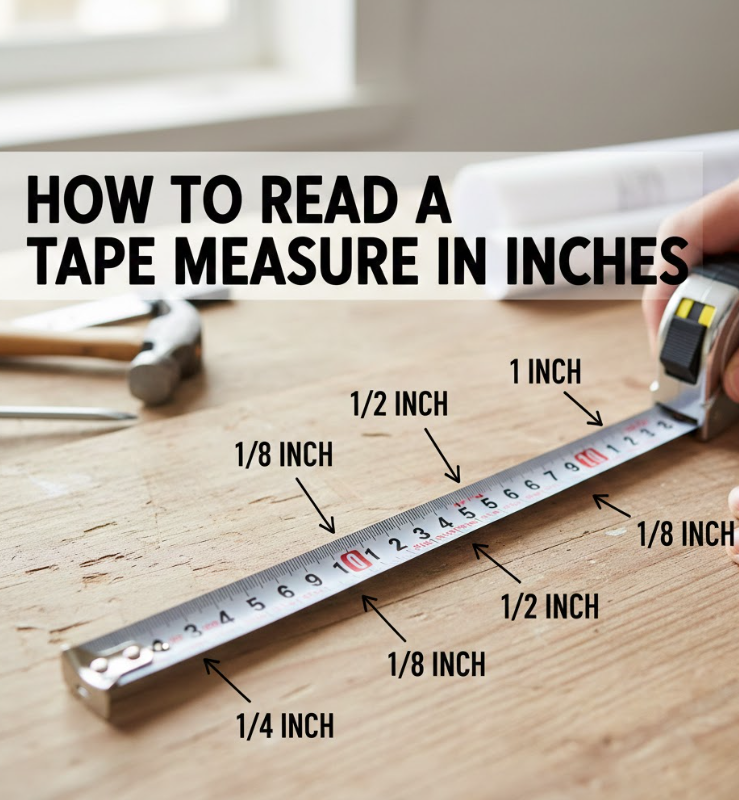
Reading a tape measure in inches is essential in countries where the imperial system is commonly used. Inches are divided into fractions that represent precise measurements, and learning to recognize these divisions builds confidence in woodworking, home improvement, and construction tasks. This section breaks the process down in a simple, logical way so the markings make sense at a glance.
A standard tape measure shows whole inches, followed by fractional marks that divide each inch into equal parts. Understanding these divisions helps you measure accurately without guessing or rounding incorrectly.
Key Points Explained
• Understanding whole inch markings
Whole inches are shown as large, bold numbers along the tape. Each number represents a full inch from the starting point. When measuring an object, you always begin counting from the zero mark at the hook, then note the last visible whole number before the object ends.
• Recognizing half-inch marks
The half-inch mark is typically the longest line between two numbers. It sits directly halfway between inch numbers and helps you quickly identify measurements like 3½ inches. This is especially useful when cutting materials where precision matters but extreme accuracy is not required.
• Quarter-inch divisions explained
Quarter-inch marks divide each inch into four equal parts. These lines are shorter than half-inch marks but longer than smaller fractions. Learning to spot ¼ and ¾ inches improves measurement accuracy in tasks like shelving and trim installation.
• Eighth-inch markings and their purpose
Eighth-inch lines are thinner and more frequent. They allow for finer measurements, especially in carpentry and DIY projects. Recognizing these marks helps reduce errors when pieces must fit together snugly.
• Sixteenth-inch precision
Most tape measures divide inches into sixteenths. These are the smallest visible lines and provide high accuracy. While they can look overwhelming, counting from the nearest known fraction makes them manageable.
• Practical measuring example
If an object ends at the third small line past the 5½-inch mark, the measurement is 5 11/16 inches. Practicing real measurements helps train your eye to read fractions quickly and confidently.
Also Read:- How to Make Chili: A Complete Step-by-Step Cooking Guide
Cheat Sheet: How to Read a Tape Measure
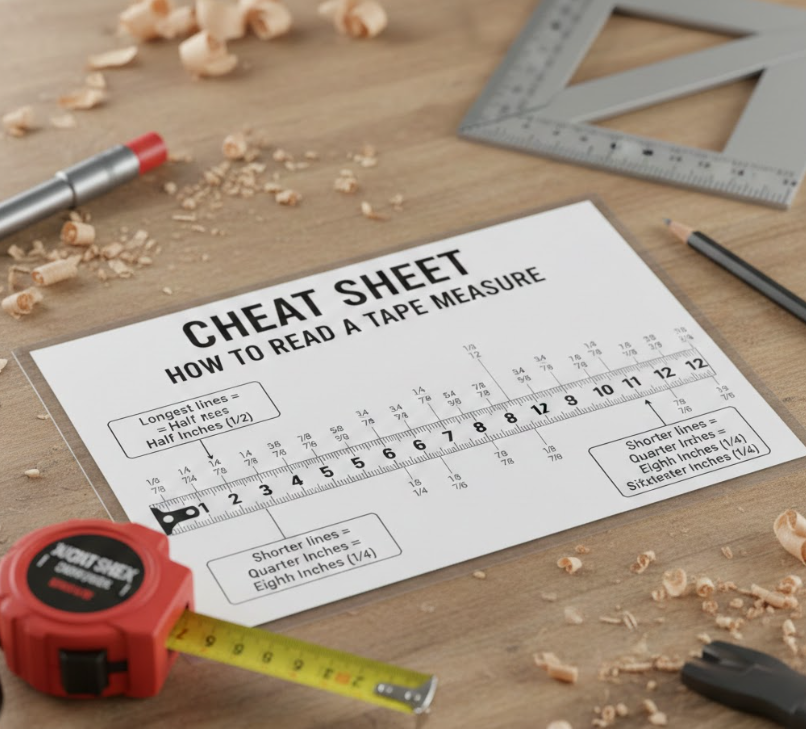
A cheat sheet simplifies tape measure reading by turning fractions into easy references. This approach is ideal for beginners or anyone who wants quick accuracy without mental math. Cheat sheets are commonly used by professionals to reduce mistakes on the job.
Instead of memorizing every fraction, you learn patterns that repeat across the tape. Over time, this builds natural recognition.
Key Points Explained
• Why cheat sheets are effective
Cheat sheets reduce mental load by showing common fractions visually. This is helpful when working under time pressure or when accuracy is critical, such as cabinetry or framing work.
• Common inch fraction breakdowns
Fractions like ¼, ½, ¾, ⅛, and 1/16 repeat consistently. Once you recognize these visually, you can read any inch measurement without counting every line.
• Using visual grouping
Grouping lines by length allows you to identify measurements faster. Longer lines indicate larger fractions, while shorter lines represent finer increments.
• Printable tape measure references
Many professionals keep printable fraction charts nearby. These charts are especially useful when learning or teaching others how to read a tape measure efficiently.
• Avoiding common beginner mistakes
Beginners often count lines instead of recognizing fractions. A cheat sheet shifts focus from counting to recognition, reducing errors significantly.
• Transitioning from cheat sheet to mastery
With regular use, you rely less on the cheat sheet as fraction recognition becomes automatic. This builds long-term measurement confidence.
Also Read:- How to Cook Bacon in the Oven: Ultimate Guide
How to Read a Tape Measure in Millimeters (mm)
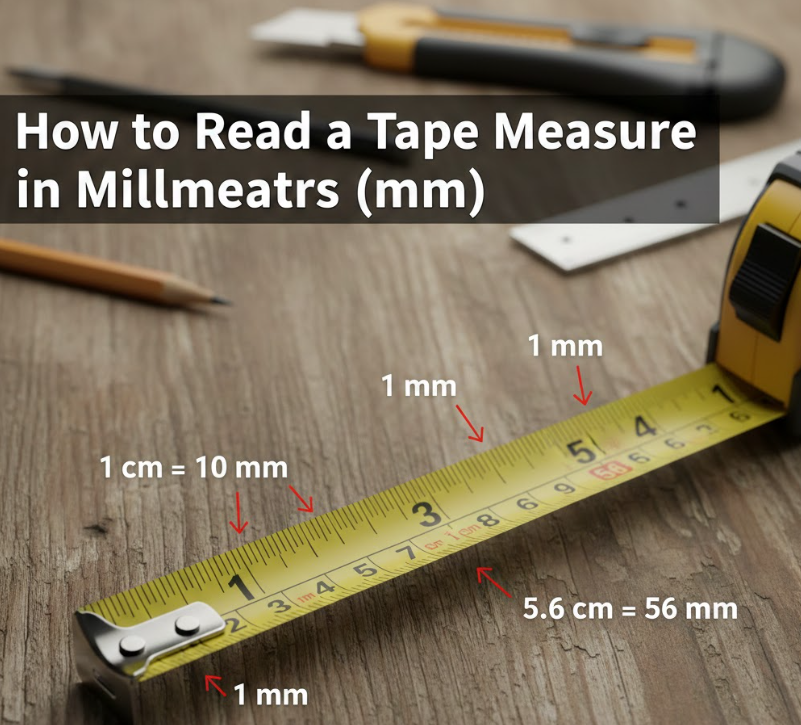
Millimeters are part of the metric system, known for its simplicity and precision. Unlike inches, millimeters are evenly spaced, making them easier to read once you understand the scale. This system is widely used in engineering, manufacturing, and international projects.
A millimeter-based tape measure removes fractions entirely, replacing them with consistent numeric spacing.
Key Points Explained
• Understanding millimeter spacing
Each small line represents one millimeter. Ten millimeters equal one centimeter, and one hundred millimeters equal ten centimeters.
• Identifying longer lines
Longer lines usually mark every 5 or 10 millimeters. These visual cues help you quickly estimate distances without counting every single line.
• Reading exact measurements
To read a measurement, locate the last full centimeter, then count the millimeter lines beyond it. This method ensures precision.
• Why millimeters are more precise
Millimeters allow extremely accurate measurements, especially in technical fields like machining and electronics, where small differences matter.
• Converting millimeters to other units
Knowing that 25.4 mm equals one inch helps when switching between metric and imperial systems.
• Real-world usage examples
Millimeter measurements are commonly used in product specifications, mechanical parts, and international construction standards.
How to Read a Tape Measure in Centimeters (cm)
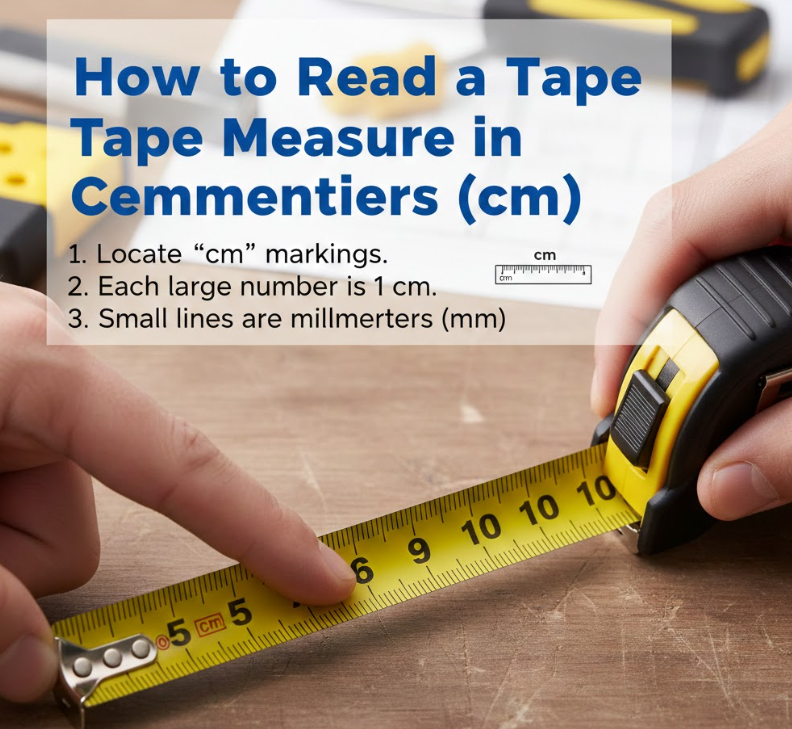
Centimeters sit between millimeters and meters in the metric system. They are commonly used in everyday measurements such as furniture sizing, clothing, and room dimensions. Reading centimeters is straightforward once you understand how they relate to millimeters.
Centimeters offer a balance between simplicity and accuracy.
Key Points Explained
• Recognizing centimeter numbers
Centimeters are marked by bold numbers, similar to inches. Each number represents one full centimeter.
• Understanding millimeter subdivisions
Each centimeter is divided into ten millimeters. Smaller lines between numbers represent these subdivisions.
• Reading mixed measurements
A measurement like 12.4 cm means twelve centimeters plus four millimeters. This clarity eliminates guesswork.
• Metric consistency advantage
Unlike inches, centimeters follow a base-10 system, making calculations faster and easier.
• Common household uses
Centimeters are widely used for measuring furniture, wall spaces, and fabric lengths.
• Accuracy in daily projects
For DIY and home planning, centimeters provide enough precision without overwhelming detail.
Also Read:- How to Parallel Park: A Complete Beginner-to-Expert Guide
How to Read a Tape Measure for Dummies (Beginner Guide)
This section is designed for absolute beginners. If tape measures feel confusing or intimidating, this approach focuses on clarity, repetition, and confidence. You don’t need technical knowledge—just simple observation and practice.
Learning how to read a tape measure for dummies means removing fear from the process.
Key Points Explained
• Start with the zero point
Always begin measuring from the metal hook. This ensures accuracy and consistency.
• Focus on the biggest numbers first
Ignore small lines initially. Identify whole units before worrying about finer details.
• Learn line length hierarchy
Longer lines mean bigger measurements. This visual system helps beginners quickly understand scale.
• Practice with everyday objects
Measure books, tables, and phones to build familiarity without pressure.
• Avoid overthinking fractions
Approximate when needed. Precision improves naturally with practice.
• Build confidence through repetition
Frequent use turns confusion into instinct, even for complete beginners.
Also Read:- How to Ride a Bike: A Complete Beginner-to-Advanced Guide
Conclusion
Learning how to read a tape measure is a foundational skill that pays off for life. Whether you’re working in inches, millimeters, or centimeters, understanding the markings eliminates guesswork and improves accuracy. With practice, what once seemed confusing becomes second nature.
This guide equips you with the knowledge to measure confidently, accurately, and efficiently—no matter the task.
FAQs
Is reading a tape measure hard?
No. With basic understanding and practice, anyone can master it.
Which system is easier: inches or metric?
Metric is generally easier due to its base-10 structure, but inches are manageable with practice.
Do professionals still use cheat sheets?
Yes. Even experienced workers use them to avoid costly mistakes.
For More Update Visit: VallayTaxNv
