Knitting is one of the most relaxing, creative, and rewarding hobbies you can learn. If you’ve been wondering how to start knitting, you’re not alone. Millions of people worldwide have discovered the joy of creating beautiful scarves, blankets, and garments using just yarn and needles. Knitting is more than a craft—it improves mental health, reduces stress, and boosts creativity.
According to the Craft Yarn Council, knitting has grown significantly in popularity, especially among beginners seeking relaxing and productive hobbies. Studies show that repetitive knitting motions can lower heart rate, reduce anxiety, and improve focus.
This complete guide will teach you exactly how to start knitting for beginners, including tools, techniques, and step-by-step instructions for scarves, blankets, and knitting in the round.
How to Start Knitting for Beginners
Learning how to start knitting for beginners involves understanding the basic tools, stitches, and techniques that form the foundation of knitting. Knitting works by creating loops of yarn using needles, forming fabric row by row. Once you learn the basics, you can create endless projects.
Knitting is beginner-friendly because it only requires two essential stitches: the knit stitch and the purl stitch. These stitches form the building blocks of all knitting patterns.
Essential Beginner Steps to Start Knitting
• Choose the right knitting needles for beginners
Knitting needles are your primary tools, and choosing the right ones makes learning easier. Beginners should start with medium-size needles, typically US size 7–9 (4.5–5.5 mm). These sizes are easy to handle and help you see stitches clearly.
Wood or bamboo needles are ideal for beginners because they provide better grip than metal needles. This prevents stitches from slipping off accidentally. Metal needles are smoother but can be harder to control initially.
Needle length also matters. Straight needles around 10 inches long are perfect for beginners. They provide enough space without being difficult to manage.
• Select beginner-friendly yarn
Yarn choice affects your knitting experience significantly. Medium-weight yarn, known as worsted weight yarn, is best for beginners. It is thick enough to see clearly but not too bulky.
Avoid very thin yarn because it is harder to see and manage. Also avoid very fluffy or textured yarn because it hides stitches, making learning difficult. Smooth yarn allows you to see your progress clearly.
Acrylic yarn is affordable, durable, and widely available. Cotton yarn is also good but slightly less stretchy, which can make knitting slightly harder for beginners.
• Learn how to hold knitting needles and yarn properly
Proper hand positioning improves control and comfort. Hold one needle in each hand and wrap yarn around your fingers to maintain tension.
Do not grip too tightly. Relaxed hands help you knit smoothly and prevent fatigue. Beginners often grip too tightly, which makes knitting harder.
Practice improves comfort. Your hands will naturally develop muscle memory over time.
• Understand the basic knit stitch
The knit stitch is the foundation of knitting. It creates smooth, flat fabric and is used in most beginner projects.
To knit, insert the needle into a loop, wrap yarn around it, and pull it through. This creates a new loop while removing the old one.
Practice knitting rows repeatedly. This builds confidence and skill.
• Learn the purl stitch for advanced beginner skills
The purl stitch is the opposite of the knit stitch. Together, knit and purl stitches create all knitting patterns.
Purl stitches create textured fabric and are used in ribbing and advanced patterns.
Learning both stitches expands your knitting possibilities.
• Practice regularly and be patient
Knitting improves with practice. Beginners often make mistakes, which is normal.
Practice daily for short periods. Even 15 minutes daily improves skills quickly.
Patience builds confidence and mastery.
Also Read:- How to Add Fractions: The Complete Step-by-Step Guide for Students and Adults
How to Start Knitting a Scarf
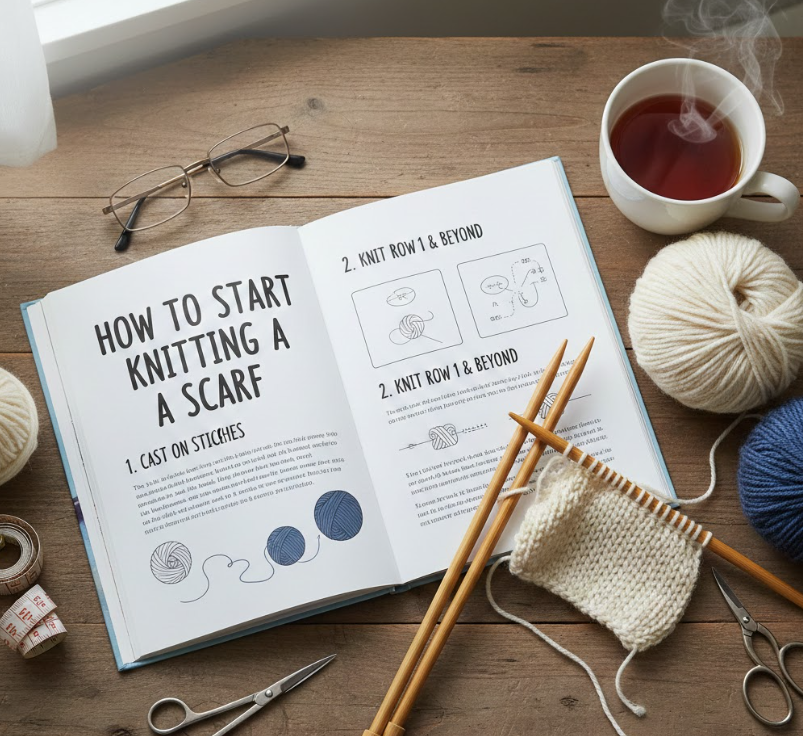
Knitting a scarf is the best beginner project because it is simple, practical, and helps you practice basic stitches. Scarves are rectangular and do not require shaping, making them ideal for beginners learning how to start knitting.
Scarves allow beginners to focus on stitch consistency, tension, and technique without worrying about complex patterns.
Steps to Start Knitting a Scarf
• Choose a simple scarf pattern
Beginner scarf patterns use only knit stitches or simple knit-purl combinations. This keeps the project manageable and enjoyable.
Simple patterns allow beginners to focus on learning technique instead of complicated instructions.
Many free scarf patterns are available online and from knitting organizations.
• Cast on the correct number of stitches
Casting on creates the first row of stitches on your needle. This is the foundation of your project.
For scarves, beginners typically cast on 20–30 stitches depending on desired width.
Consistent casting on ensures even edges.
• Practice knitting rows consistently
Knitting scarves involves repeating rows until desired length is reached.
Consistency improves stitch appearance and fabric quality.
Each row builds skill and confidence.
• Maintain consistent yarn tension
Tension affects stitch size and fabric quality. Loose tension creates uneven fabric, while tight tension makes knitting difficult.
Practice maintaining steady tension throughout your project.
Consistency improves professional appearance.
• Bind off stitches properly to finish scarf
Binding off secures stitches and prevents unraveling.
Proper finishing gives your scarf a clean, professional edge.
Practice improves finishing quality.
• Block your scarf for professional results
Blocking involves gently shaping and smoothing your finished scarf.
This improves appearance and stitch consistency.
Blocking enhances final quality.
Also Read:- How to Archive an Amazon Order: The Complete 2025 Step-by-Step Guide
How to Start Knitting a Blanket
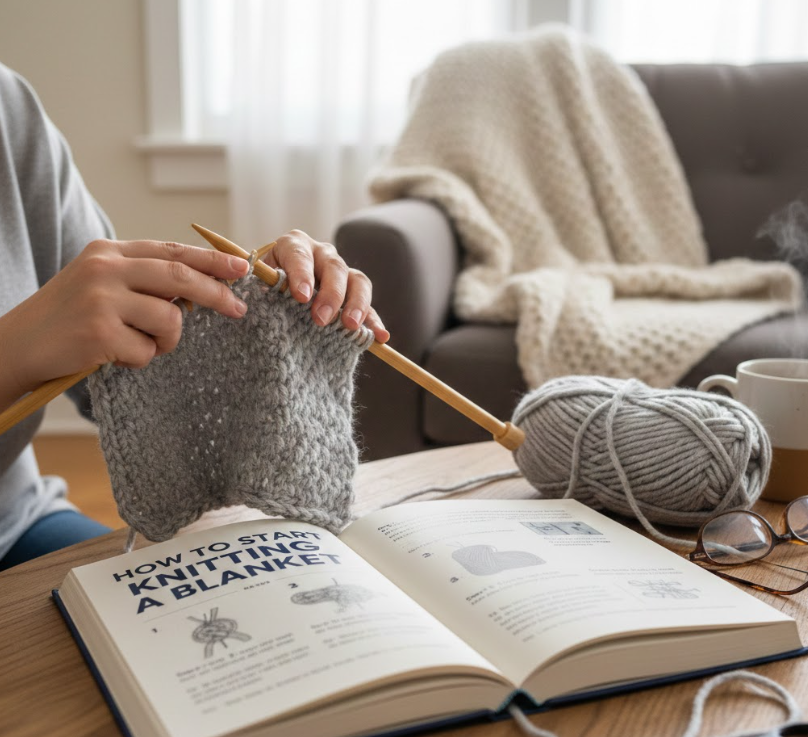
Knitting a blanket is a rewarding beginner project that builds skill and confidence. Blankets are larger than scarves but use similar techniques.
Blankets allow beginners to practice consistency, patience, and endurance.
Steps to Start Knitting a Blanket
• Choose beginner blanket yarn and needles
Blankets require thicker yarn for faster progress. Bulky yarn is ideal.
Thicker yarn creates warm, soft blankets.
Larger needles improve knitting speed.
• Start with a small beginner blanket size
Beginners should start with small lap blankets.
Smaller projects prevent frustration.
Completion builds confidence.
• Use simple stitch patterns
Basic knit stitch patterns are best for beginners.
Simple patterns reduce errors.
Practice improves consistency.
• Work consistently row by row
Blankets require patience and repetition.
Consistency improves quality.
Regular knitting improves skill.
• Check progress regularly
Checking prevents mistakes from growing.
Early corrections save time.
Monitoring improves results.
• Finish and block blanket properly
Blocking improves appearance.
Finishing secures stitches.
Professional finishing improves quality.
Also Read:- How to Address an Envelope: The Complete Step-by-Step Professional Guide
How to Start Knitting in the Round
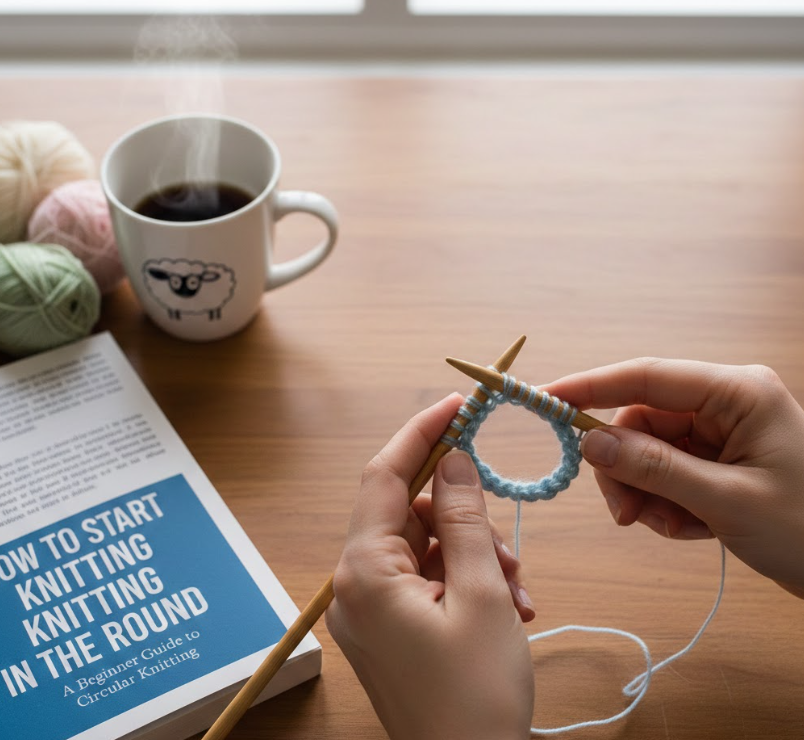
Knitting in the round allows you to create hats, socks, and seamless garments. Instead of knitting back and forth, you knit in circles.
Circular knitting eliminates seams and creates smooth, continuous fabric.
Steps to Start Knitting in the Round
• Use circular needles or double-pointed needles
Circular needles connect with flexible cables.
They allow seamless knitting.
They are ideal for hats and sleeves.
• Cast on stitches and join carefully
Joining incorrectly twists stitches.
Careful joining ensures smooth knitting.
Proper joining prevents errors.
• Use stitch markers for guidance
Markers indicate starting point.
They help track progress.
Markers prevent confusion.
• Knit continuously without turning work
Circular knitting eliminates turning.
Continuous knitting improves speed.
Fabric appears smoother.
• Maintain stitch consistency
Consistency improves fabric quality.
Practice improves skill.
Even stitches improve appearance.
• Finish projects properly
Proper finishing prevents unraveling.
Finishing improves durability.
Professional finishing improves appearance.
Essential Knitting Tips for Beginners
• Start with simple projects
• Practice daily
• Choose beginner-friendly materials
• Learn from tutorials and guides
• Be patient with mistakes
• Enjoy the process
Also Read:- How to Flirt: Complete Guide to Confident, Natural, and Effective Flirting
Conclusion
Learning how to start knitting is one of the most rewarding creative skills you can develop. With the right tools, proper guidance, and consistent practice, anyone can learn knitting successfully.
Start with beginner projects like scarves, then progress to blankets and circular knitting. Over time, your skills will improve, and knitting will become easier and more enjoyable.
Knitting is not just about creating fabric—it’s about relaxation, creativity, and personal satisfaction.
FAQs
Is knitting hard for beginners?
No. With practice and simple projects, beginners can learn quickly.
What is the easiest knitting project?
Scarves are the easiest beginner knitting projects.
How long does it take to learn knitting?
Most beginners learn basic knitting within a few days.
What tools do beginners need?
Needles, yarn, scissors, and patience.
For More Update Visit: VallayTaxNv