
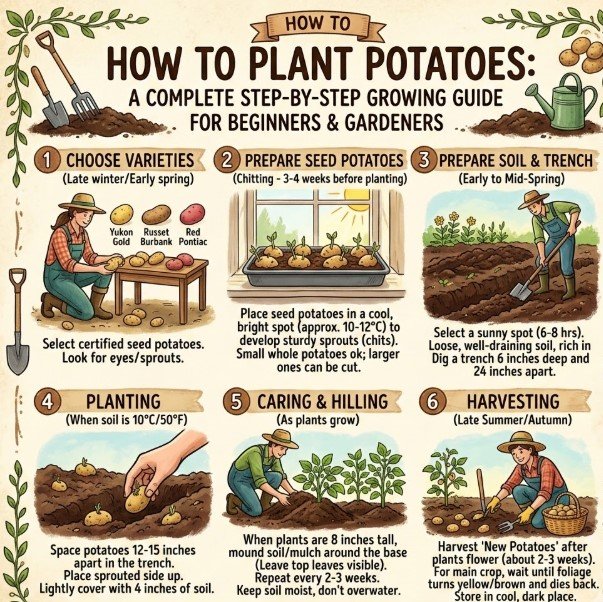
If you’ve ever wondered how to plant potatoes successfully at home, you’re in the right place. Potatoes are one of the most rewarding crops for home gardeners because they are productive, versatile, and surprisingly easy to grow. Whether you have a large backyard garden or just a small balcony, you can grow fresh potatoes using bags, buckets, containers, or raised beds.
Potatoes are among the world’s most important food crops. According to the Food and Agriculture Organization, potatoes rank as one of the top staple foods globally due to their high yield and nutritional value. Rich in potassium, fiber, and vitamin C, they are both affordable and nutrient-dense.
This article follows evidence-based gardening principles and recommendations from trusted institutions such as University of Minnesota Extension to ensure accuracy and reliability.
Understanding the Basics of How to Plant Potatoes
Planting potatoes may seem simple, but proper preparation significantly increases your yield and reduces disease risks. Potatoes grow underground from small pieces of tubers known as “seed potatoes,” not from traditional seeds. These tubers produce sprouts, commonly called “eyes,” which develop into full plants.
Growing potatoes requires loose, well-draining soil, cool weather conditions, and proper spacing to allow tuber development. Unlike many vegetables, potatoes grow best in early spring when soil temperatures range between 45°F and 60°F.
Key Foundational Points
• Choose Certified Seed Potatoes Instead of Grocery Store Potatoes
Certified seed potatoes are disease-free and specifically grown for planting. Grocery store potatoes are often treated with sprout inhibitors and may carry soil-borne diseases that affect yield and plant health.
• Select the Right Variety for Your Climate
Early, mid-season, and late-season potato varieties differ in maturity time. Gardeners in warmer regions benefit from early varieties, while cooler climates can support longer-maturing types.
• Prepare Loose, Nutrient-Rich Soil
Potatoes need well-drained, sandy-loam soil rich in organic matter. Compacted soil restricts tuber growth and increases the risk of rot and deformities.
• Ensure Proper Sunlight Exposure
Potatoes require at least 6–8 hours of direct sunlight daily. Insufficient sunlight leads to weak growth and reduced yields.
• Monitor Soil Temperature Before Planting
Planting in cold, waterlogged soil slows sprouting and promotes fungal disease. Soil should consistently measure above 45°F for best results.
• Practice Crop Rotation for Disease Prevention
Avoid planting potatoes in the same location year after year. Rotating crops reduces the buildup of pests and pathogens in the soil.
Also Read:- How to Download TikTok Back – Complete Step-by-Step Guide
How to Plant Potatoes Step by Step for Maximum Yield
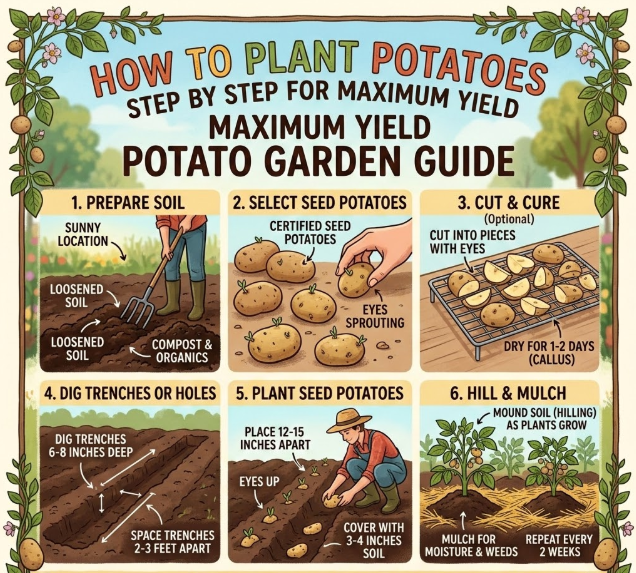
Understanding how to plant potatoes step by step ensures strong plant development and optimal harvest size. This structured approach minimizes common mistakes and promotes healthy root formation.
Step-by-Step Planting Guide
• Cut Seed Potatoes Properly
If potatoes are large, cut them into chunks with at least one or two eyes per piece. Allow cut surfaces to dry and callous for 24–48 hours before planting to reduce rot.
• Dig Trenches 6–8 Inches Deep
Create trenches spaced 2–3 feet apart. This spacing allows room for hilling and proper airflow between plants.
• Place Seed Pieces Eye-Side Up
Position pieces 10–12 inches apart in the trench with the sprouting eyes facing upward. This orientation supports upright stem development.
• Cover with 3–4 Inches of Soil Initially
Do not fill the trench completely at first. Partial covering encourages sprout emergence and makes hilling easier later.
• Hill Soil Around Plants as They Grow
When plants reach 6–8 inches tall, mound soil around stems. Hilling protects developing tubers from sunlight, which can cause greening and toxicity.
• Water Consistently but Avoid Overwatering
Potatoes require steady moisture, especially during flowering and tuber formation. Overwatering, however, increases the risk of fungal diseases.
Also Read:- How to Double Cleanse: The Complete Expert Guide for Face, Hair, and Body
How to Plant Potatoes with Eyes Successfully
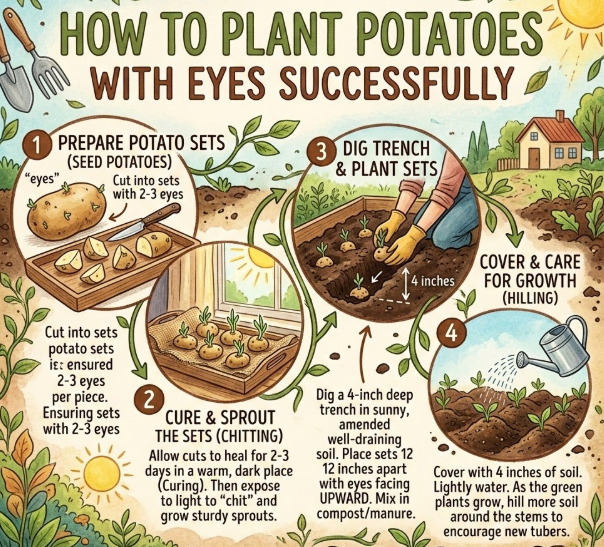
Learning how to plant potatoes with eyes focuses on understanding potato anatomy. The “eyes” are growth nodes that sprout into stems and leaves.
Detailed Eye-Based Planting Points
• Identify Healthy Sprouting Eyes
Choose firm potatoes with visible, short sprouts. Long, fragile sprouts can break easily and reduce plant vigor.
• Cut Around Each Eye Carefully
Ensure each cut piece contains at least one strong eye. Too many eyes on one piece can crowd growth and reduce tuber size.
• Allow Proper Healing Time Before Planting
Drying cut surfaces prevents bacterial soft rot. This step is crucial in humid climates.
• Plant at Correct Depth
Eyes should sit about 4 inches below soil surface initially. Too deep slows sprouting; too shallow exposes tubers.
• Protect Sprouts from Frost
If frost threatens, cover emerging plants with soil or straw mulch to prevent damage.
• Monitor Early Growth Closely
Healthy eye development leads to vigorous stems. Weak sprouting indicates poor seed quality or soil issues.
Also Read:- How to Juggle: The Complete Beginner-to-Advanced Mastery Guide
How to Plant Potatoes in Bags for Small Spaces
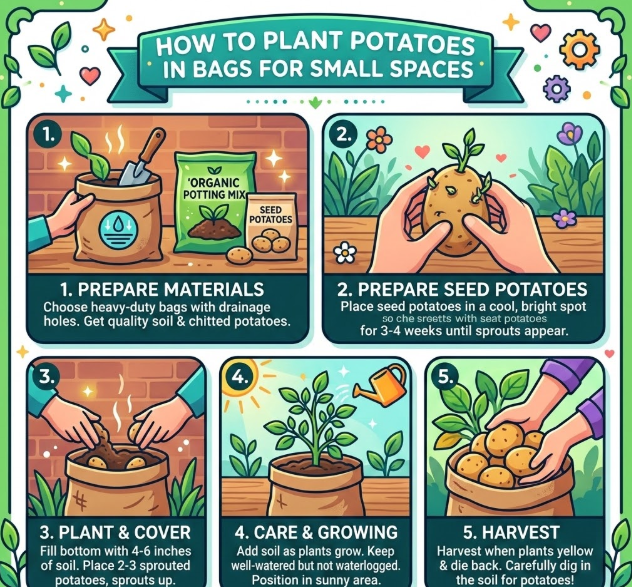
Container gardening has made it easier than ever to learn how to plant potatoes in bags. This method is ideal for urban gardeners or renters.
Bag Planting Strategy
• Choose Durable Grow Bags
Select breathable fabric grow bags at least 10–15 gallons in size to allow sufficient tuber expansion.
• Fill with Quality Potting Mix
Use lightweight, well-draining potting soil mixed with compost. Avoid heavy garden soil, which compacts in containers.
• Layer Soil Gradually
Start with 4 inches of soil, add seed potatoes, and cover lightly. Add more soil as plants grow to mimic hilling.
• Position in Full Sunlight
Place bags in areas receiving 6–8 hours of sunlight daily for optimal tuber formation.
• Water Frequently but Ensure Drainage
Bags dry out faster than ground soil, so check moisture regularly while preventing waterlogging.
• Harvest by Emptying the Bag
When foliage yellows, dump the bag to reveal clean, easy-to-harvest potatoes.
Also Read:- How to Use a Multimeter: The Complete Beginner to Pro Guide
How to Plant Potatoes in a Bucket Effectively
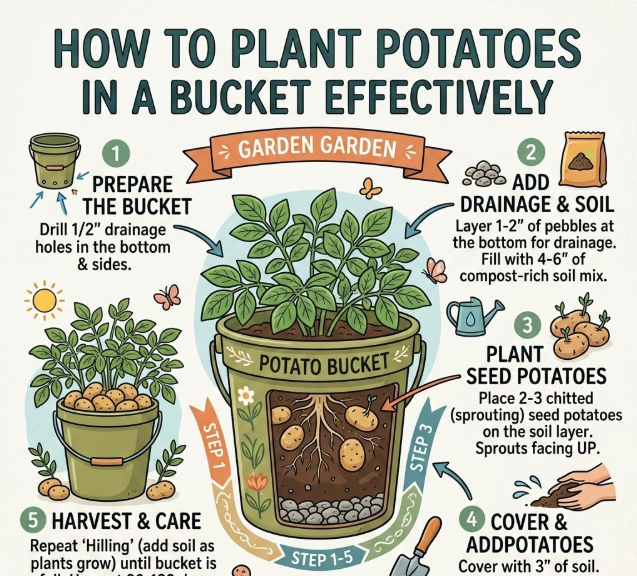
Growing potatoes in a bucket is another compact solution. This technique works well for patios and balconies.
Bucket Planting Method
• Use a 5-Gallon Bucket with Drainage Holes
Drill holes at the bottom to prevent water buildup, which can cause root rot.
• Add a Base Layer of Soil and Compost
Mix equal parts compost and potting soil for balanced nutrition.
• Plant 1–2 Seed Pieces per Bucket
Overcrowding reduces yield and increases competition for nutrients.
• Add Soil Gradually as Plants Grow
Continue adding soil until bucket is nearly full, leaving room at the top for watering.
• Water Consistently During Flowering
Tuber formation peaks during flowering stage, requiring consistent moisture.
• Harvest When Tops Die Back
Once foliage dries naturally, stop watering and harvest after two weeks.
Also Read:- How to Transfer Photos from iPhone to Computer (Complete 2026 Guide)
How to Plant Potatoes in Containers of All Types
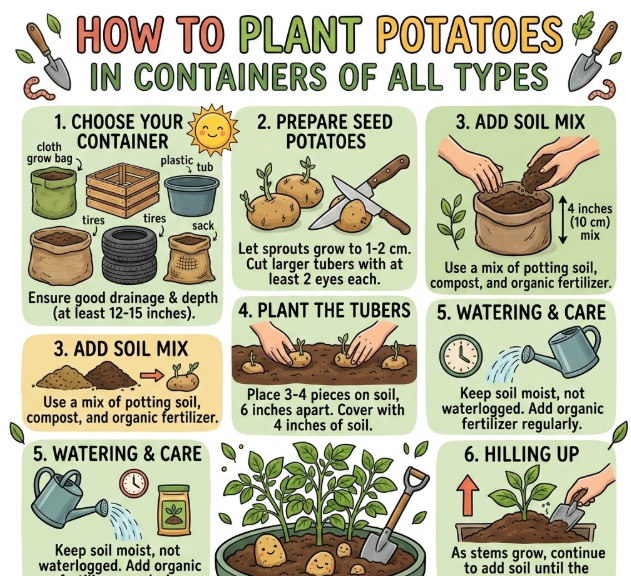
Understanding how to plant potatoes in containers broadens your gardening flexibility.
Container Planting Essentials
• Select Containers at Least 16 Inches Deep
Depth allows adequate root and tuber expansion.
• Ensure Excellent Drainage
Drainage holes prevent stagnant water, which promotes disease.
• Use Loose, Fertile Growing Medium
High-organic compost blends encourage strong tuber formation.
• Fertilize Moderately with Balanced Nutrients
Avoid excessive nitrogen, which promotes foliage over tuber growth.
• Rotate Container Position if Needed
Ensure even sun exposure for balanced growth.
• Harvest Carefully to Avoid Bruising
Gently sift soil to prevent damaging delicate skins.
Also Read:- How to Make a Roux: The Ultimate Guide for Perfect Sauces and Gravies
How to Plant Potatoes from Potatoes at Home
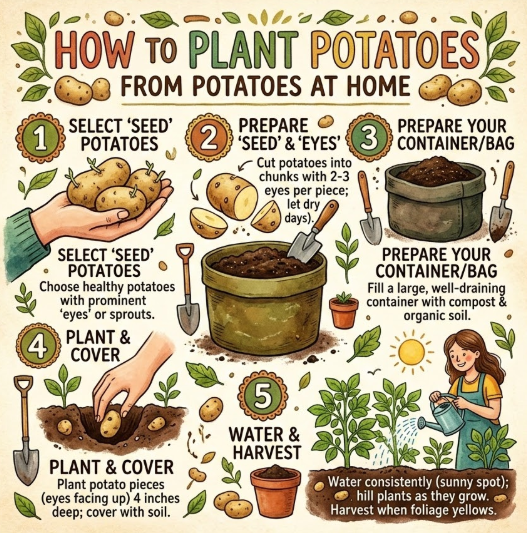
Yes, you can grow potatoes from potatoes. However, proper preparation is essential.
From-Potato Growing Tips
• Choose Firm, Sprouted Potatoes
Avoid soft or moldy tubers.
• Encourage Sprouting in Indirect Light
Place potatoes in a cool, bright room to stimulate healthy eye growth.
• Cut and Cure Before Planting
Allow surfaces to dry for disease prevention.
• Plant During Cool Seasons
Early spring or fall works best in moderate climates.
• Avoid Reusing Diseased Stock
Disease can transfer to future crops.
• Improve Soil Each Season
Add compost annually to replenish nutrients.
Conclusion
Learning how to plant potatoes empowers you to grow one of the world’s most essential and versatile crops. Whether you use garden beds, bags, buckets, or containers, the key principles remain consistent: use certified seed potatoes, provide loose fertile soil, ensure proper spacing, hill plants as they grow, and maintain steady moisture.
With patience and proper technique, you’ll enjoy a generous harvest of fresh, homegrown potatoes that are healthier and more flavorful than store-bought varieties.
FAQs
When is the best time to plant potatoes?
Early spring when soil temperatures reach 45°F–60°F.
How long do potatoes take to grow?
Typically 70–120 days depending on variety.
Can I grow potatoes indoors?
Yes, in large containers with sufficient sunlight.
Why are my potatoes small?
Possible causes include overcrowding, poor soil nutrition, or lack of water.
How do I store harvested potatoes?
Store in a cool, dark, well-ventilated space to prevent sprouting.
For More Update Visit: VallayTaxNv
