
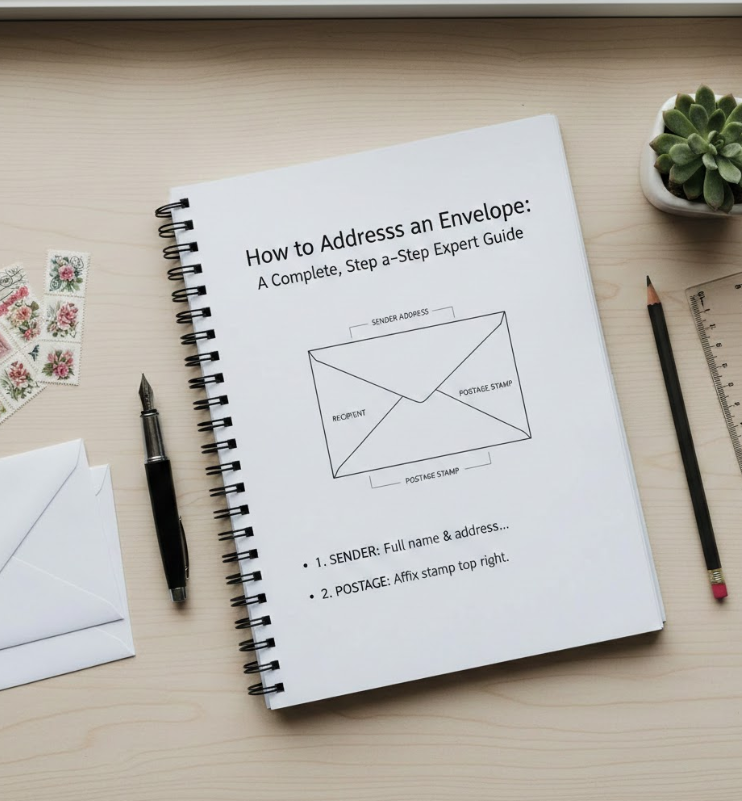
Knowing how to address an envelope correctly may seem like a simple skill, yet it plays a critical role in ensuring mail reaches its destination accurately and on time. Whether you are sending personal letters, legal documents, invitations, or business correspondence, a properly addressed envelope reflects professionalism, attention to detail, and respect for postal standards.
Incorrectly written addresses can lead to delayed delivery, returned mail, or even lost correspondence. With postal services relying on automated sorting systems, formatting accuracy is more important than ever. Small mistakes such as misplaced apartment numbers, missing PO box identifiers, or unclear recipient names can disrupt the delivery process.
This comprehensive guide explains how to address an envelope for a wide range of situations, including apartments, PO boxes, families, and special attention lines. Each section offers detailed explanations, practical examples, and best practices designed to meet both personal and professional mailing needs.
Understanding the Basic Structure of an Envelope Address
Before diving into specific scenarios, it’s important to understand the universal structure used by postal services worldwide. A properly addressed envelope follows a predictable layout that allows automated systems and human handlers to read it quickly.
A standard envelope includes the recipient’s name, street address, city, state, and ZIP or postal code. The return address is placed in the top-left corner, while postage appears in the top-right corner. Consistent formatting improves delivery speed and accuracy.
Mastering these fundamentals ensures that more complex addressing scenarios, such as apartments or PO boxes, are handled with confidence and precision.
How to Address an Envelope to an Apartment
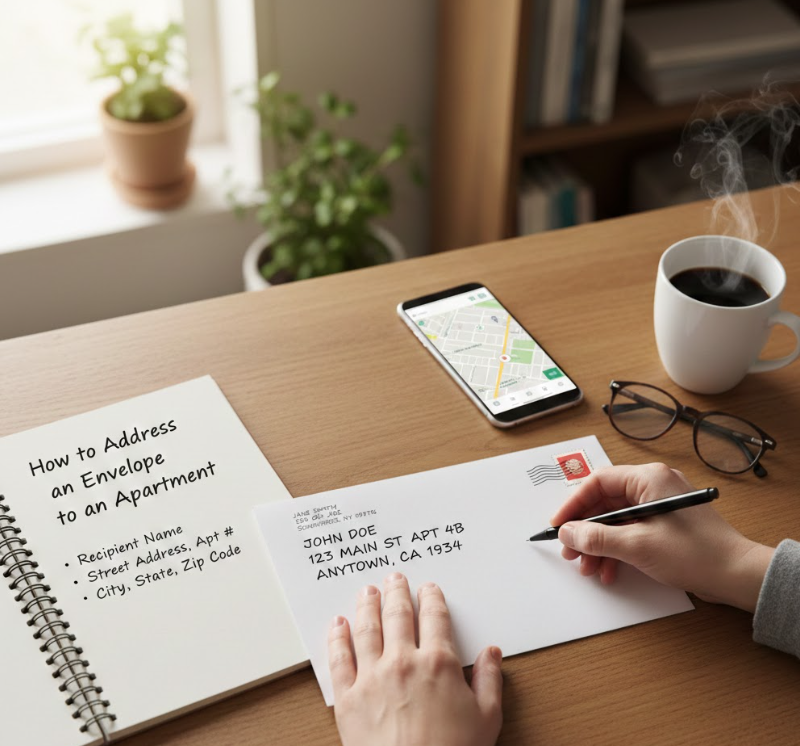
Addressing an envelope to an apartment requires clarity and precision because multiple residences share the same building address. Including the correct apartment information ensures the mail carrier can identify the exact recipient.
Why Apartment Addressing Matters
Apartment buildings often house dozens or hundreds of residents. Without clear unit identification, mail can be misdelivered or returned.
Best Practices for Addressing an Apartment Envelope
• Write the recipient’s full legal name to avoid confusion with other residents
• Place the apartment number on the same line as the street address or directly below it
• Use standardized abbreviations such as “Apt,” “Unit,” or “#” for consistency
• Ensure the apartment number is clearly legible and not abbreviated incorrectly
• Use correct city, state, and ZIP code formatting to support postal automation
• Avoid adding unnecessary descriptions that may confuse sorting systems
Proper apartment addressing demonstrates attention to detail and ensures accurate delivery in multi-unit buildings.
Also Read:- How to Prestige in BO6: The Ultimate Beginner-to-Expert Guide
How to Address an Envelope to a PO Box
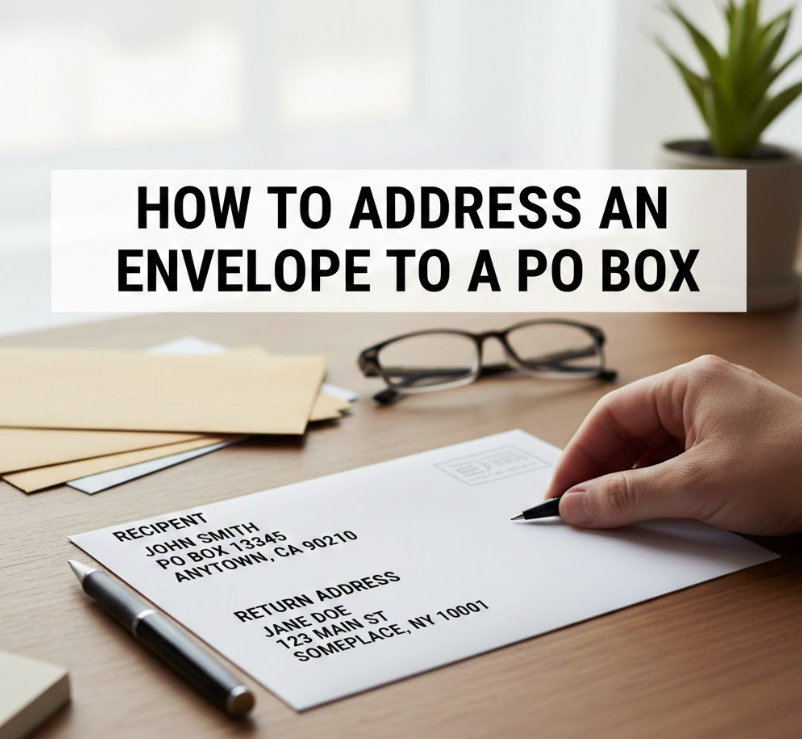
A PO Box address functions differently from a residential address. Mail sent to a PO Box is held at a post office for pickup rather than delivered to a physical location.
Understanding PO Box Mail Delivery
PO Boxes are managed by postal services and require precise formatting to ensure mail is routed correctly.
Correct Way to Address a PO Box Envelope
• Write the recipient’s full name or business name on the first line
• Clearly label “PO Box” followed by the box number on the address line
• Do not include a street address unless required by the postal service
• Place the city, state, and ZIP code directly beneath the PO Box line
• Use official postal abbreviations for states and regions
• Ensure handwriting or printed text is bold and easy to read
Correct PO Box formatting prevents delays and ensures mail is routed to the correct post office location.
Also Read:- How to Open a Combination Lock: A Safe, Legal, and Practical Guide
How to Address an Envelope to a Family
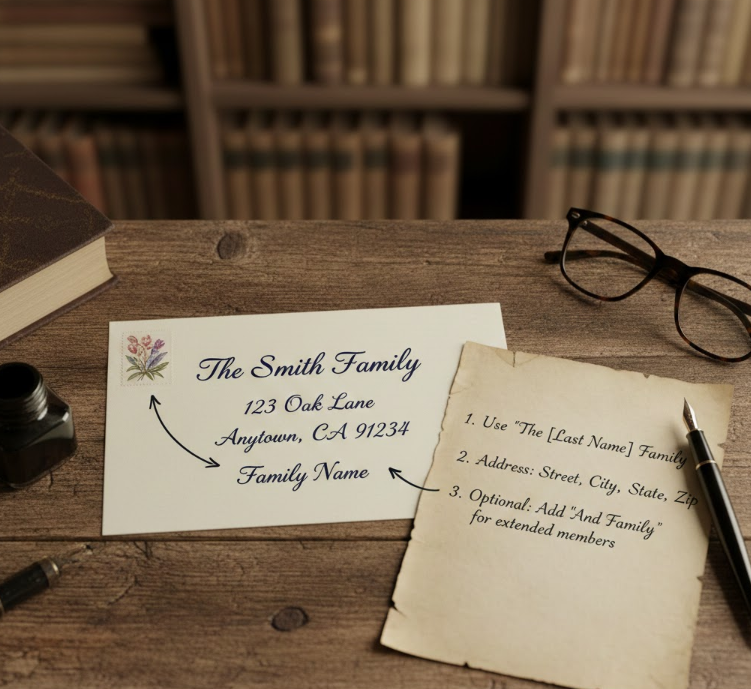
Addressing mail to a family requires thoughtful wording that reflects formality, familiarity, and respect. This is common for holiday cards, invitations, and announcements.
When Family Addressing Is Appropriate
Family addressing is ideal for shared correspondence meant for all household members rather than an individual.
Proper Family Addressing Techniques
• Use “The [Last Name] Family” for informal or celebratory mail
• Write “Mr. and Mrs. [Last Name]” for more traditional formats
• Include children’s names if the correspondence is personal and informal
• Ensure the family name matches the mailbox listing
• Avoid first names only unless you have a close personal relationship
• Maintain consistent formatting with standard postal guidelines
Thoughtful family addressing adds a personal touch while maintaining clarity and postal accuracy.
Also Read:- How to Use a Compass: A Complete Guide for Beginners, Kids, and Advanced Uses
How to Address an Envelope with an Apartment Number
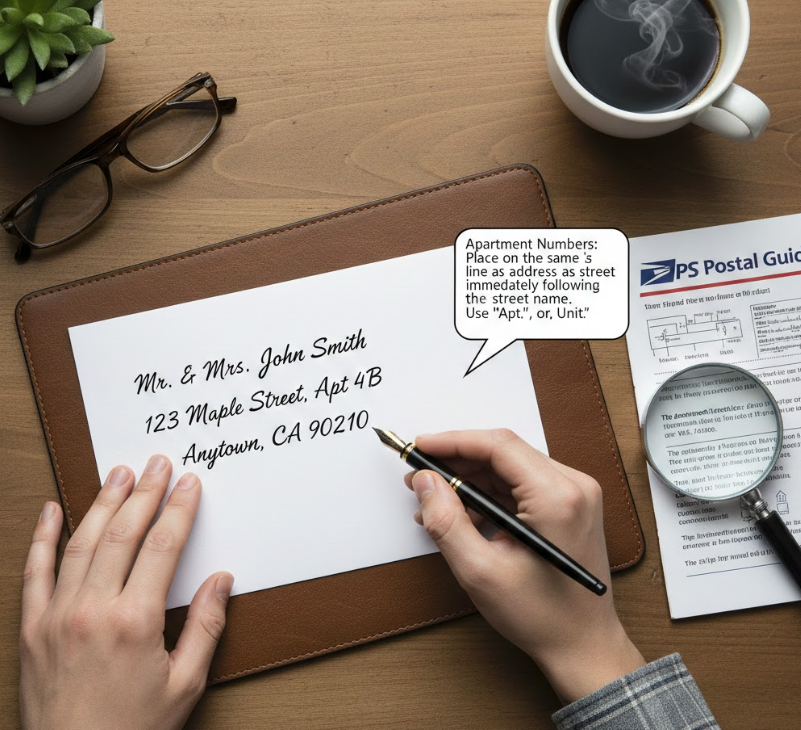
Including an apartment number correctly is essential for successful delivery in residential complexes. Even minor formatting errors can result in mail being misrouted.
Why Apartment Numbers Must Be Clear
Postal workers rely on apartment numbers to differentiate between multiple recipients at the same address.
Best Placement for Apartment Numbers
• Place the apartment number immediately after the street address
• Use a second address line if the apartment number is long or complex
• Avoid placing apartment numbers before the street name
• Use consistent abbreviations such as “Apt” or “Unit”
• Double-check the apartment number against official records
• Keep spacing clean to improve readability for automated systems
Clear apartment number placement ensures efficient sorting and accurate delivery.
Also Read:- How to Get Ink Out of Clothes: The Complete Expert Guide for Every Ink Stain
How to Address an Envelope with ATTN
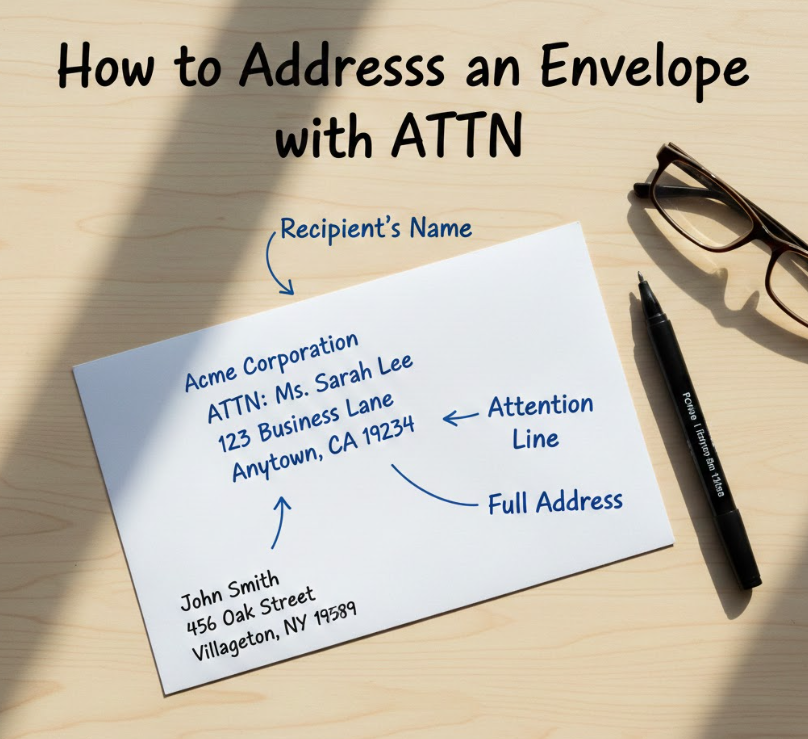
The “ATTN” line is commonly used in business or organizational mail to direct correspondence to a specific individual or department.
What ATTN Means in Mailing
“ATTN” stands for “Attention” and signals that the mail should be handled by a particular person or team.
Correct Use of ATTN in Addressing
• Write “ATTN:” followed by the recipient’s name or department
• Place the ATTN line above the street address
• Use ATTN for large organizations with multiple departments
• Avoid using ATTN for personal residential mail
• Ensure the company name appears above the ATTN line
• Keep formatting clean and professional
Using ATTN correctly improves internal routing within organizations and reduces delivery delays.
Also Read:- How to Reheat Pizza in Oven: The Ultimate Guide for Perfect Leftover Pizza
Common Addressing Mistakes to Avoid
Even small errors can disrupt mail delivery. Being aware of common mistakes helps prevent unnecessary delays.
• Omitting apartment or unit numbers
• Using unofficial abbreviations
• Writing illegible handwriting
• Placing information in the wrong order
• Forgetting ZIP or postal codes
• Using outdated or incorrect addresses
Avoiding these mistakes improves delivery reliability and professionalism.
Conclusion: Mastering How to Address an Envelope
Understanding how to address an envelope correctly is a valuable skill that ensures your mail reaches its destination quickly and accurately. Whether you’re sending mail to an apartment, PO Box, family, or business contact using an ATTN line, precision and consistency are key.
By following the expert-backed guidance in this article, you can confidently address envelopes for any situation while maintaining professionalism and postal compliance. Proper addressing saves time, prevents delivery errors, and reflects care in communication.
FAQs
Can I write the apartment number on a separate line?
Yes, especially if it improves clarity and readability.
Is ATTN required for business mail?
It is optional but highly recommended for large organizations.
Should I include punctuation in addresses?
Minimal punctuation is preferred for postal automation.
Can family names be informal?
Yes, for personal mail, but formal formats are best for official correspondence.
For More Update Visit: VallayTaxNv
