
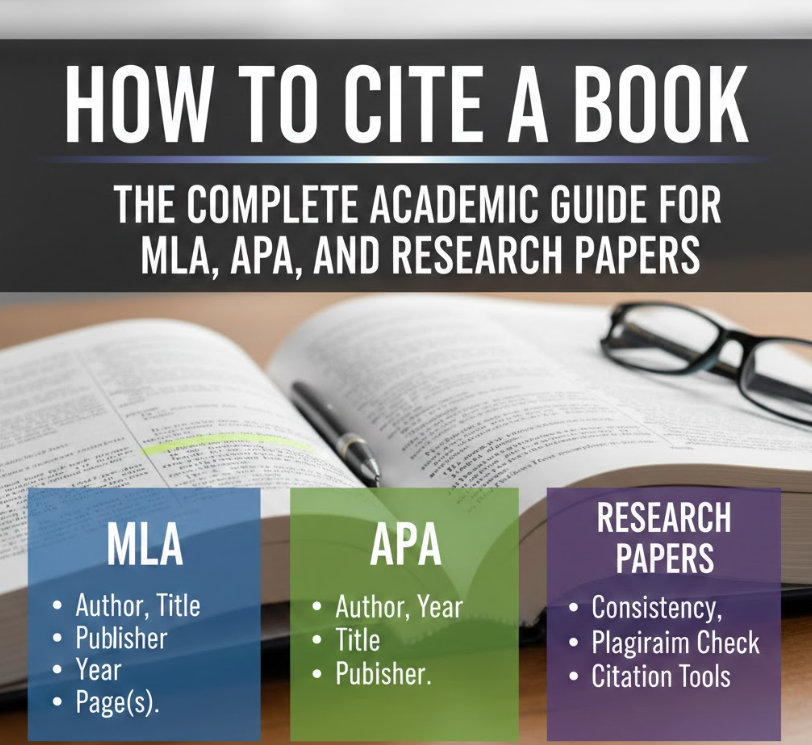
If you’re writing an essay, thesis, or research project, knowing how to cite a book correctly is essential for academic integrity. Citations give credit to original authors, strengthen your credibility, and help readers verify your sources. Whether you’re following MLA format, APA style, or inserting references directly into a paper, proper citation prevents plagiarism and aligns your work with scholarly standards.
Academic institutions worldwide emphasize accurate referencing. According to educational guidelines from organizations like the Modern Language Association and the American Psychological Association, correct citation ensures intellectual honesty and research transparency. Universities also follow ethical writing principles outlined by the Purdue Online Writing Lab, a trusted authority on formatting styles.
This comprehensive guide explains how to cite a book in MLA, how to cite a book in APA, how to cite a book APA in text, and how to cite a book in a paper step by step. Each section provides detailed explanations, examples, formatting rules, and actionable insights to help students and researchers produce polished, plagiarism-free writing.
How to Cite a Book MLA

Understanding how to cite a book MLA style is essential for humanities subjects such as literature, history, and philosophy.
MLA (Modern Language Association) style is commonly used in language arts and humanities disciplines. It emphasizes author-page in-text citations and a Works Cited page at the end of the document. Learning how to cite a book MLA ensures readers can easily locate the exact source used in your research.
MLA format prioritizes clarity, simplicity, and uniform structure. It focuses on the author’s name and page number within the text, while full publication details appear in the Works Cited section. This system avoids clutter while maintaining academic transparency.
Core Elements of MLA Book Citation
• Author’s full name (Last Name, First Name).
• Title of the book in italics.
• Publisher name.
• Year of publication.
Example (MLA Works Cited Format)
Smith, John. Understanding Modern Literature. Penguin Books, 2020.
MLA In-Text Citation Format
• Include author’s last name and page number in parentheses.
• Do not include a comma between name and page.
• Place citation before the period.
Example:
(Smith 45)
Special MLA Cases
• Multiple authors: List first author Last Name, First Name; Second Author First Name Last Name.
• Edited book: Add “edited by” before editor name.
• No author: Start with book title.
Why MLA Accuracy Matters
• Demonstrates scholarly credibility.
• Prevents plagiarism accusations.
• Aligns with university formatting standards.
• Improves clarity in humanities research.
Also Read:- How to Press Flowers: A Complete Step-by-Step Guide
How to Cite a Book APA
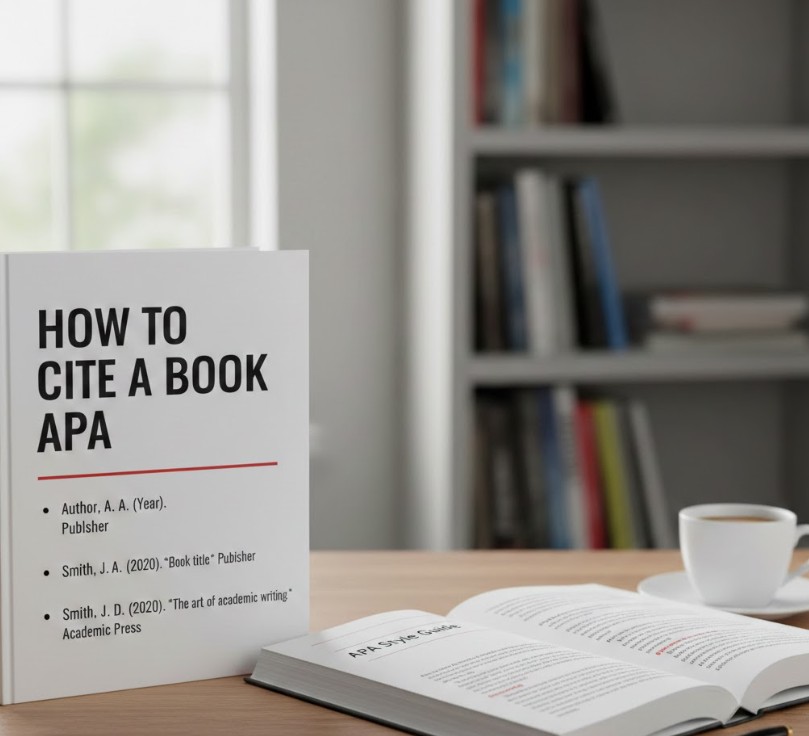
When studying psychology, education, nursing, or social sciences, knowing how to cite a book APA style is critical.
APA (American Psychological Association) style focuses on author-date citations and a detailed reference list. Unlike MLA, APA emphasizes publication year within in-text citations to highlight research timeliness.
Learning how to cite a book APA requires attention to capitalization rules, punctuation, and edition formatting. APA uses sentence case for book titles and places publication year immediately after the author’s name.
Basic APA Reference Format
• Author’s Last Name, Initials.
• (Year of publication).
• Title of book in italics (sentence case).
• Publisher.
Example (APA Reference Entry)
Smith, J. (2020). Understanding modern literature. Penguin Books.
Multiple Authors in APA
• Two authors: Use “&” symbol in reference list.
• Three or more authors: Use “et al.” in in-text citations.
• Up to 20 authors listed in reference entry (APA 7th edition).
Edition and DOI in APA
• Include edition in parentheses after title if not first edition.
• Add DOI link if available for digital books.
Example with edition:
Smith, J. (2020). Understanding modern literature (2nd ed.). Penguin Books.
Importance of APA Precision
• Emphasizes research recency.
• Provides structured citation for empirical studies.
• Supports clarity in scientific communication.
Also Read:- How to Paint Kitchen Cabinets: Complete Step-by-Step Guide for a Professional Finish
How to Cite a Book APA in Text
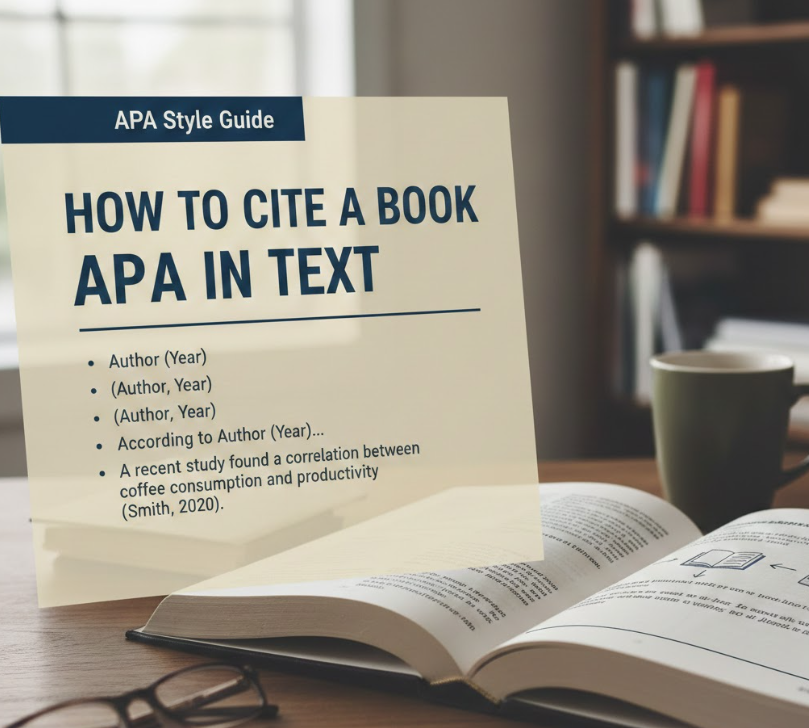
Mastering how to cite a book APA in text ensures your research arguments are properly supported within paragraphs.
APA in-text citation uses the author-date format within parentheses. It connects directly to the reference list entry, allowing readers to locate the source quickly.
The format is straightforward but must be accurate to avoid confusion. Always include the author’s last name and year of publication. Page numbers are required for direct quotations.
Basic APA In-Text Citation Examples
• Paraphrasing: (Smith, 2020)
• Direct quote: (Smith, 2020, p. 45)
• Narrative citation: Smith (2020) explains…
Multiple Authors In-Text
• Two authors: (Smith & Jones, 2020)
• Three or more authors: (Smith et al., 2020)
When to Include Page Numbers
• Required for direct quotes.
• Recommended for specific ideas.
• Not mandatory for general paraphrasing.
Common APA In-Text Mistakes
• Forgetting the year.
• Using full first names instead of initials.
• Incorrect punctuation placement.
Also Read:- How to Lower A1C: Complete Medical and Natural Guide for Better Blood Sugar Control
How to Cite a Book in a Paper
Knowing how to cite a book in a paper involves combining in-text citations with a properly formatted bibliography or reference page.
Definition of Citation Within Academic Writing
Citing a book in a paper means integrating source information into your writing while maintaining flow and readability. Citations support arguments, validate research claims, and show engagement with scholarly work.
Academic papers require both in-text citations and a final reference list (APA) or Works Cited page (MLA). Failing to include either can result in incomplete documentation.
Steps to Cite a Book in a Research Paper
• Introduce the author within your sentence.
• Provide supporting evidence from the book.
• Insert correct in-text citation format.
• Add complete source details in reference section.
• Maintain consistent formatting style throughout paper.
Integrating Quotes Smoothly
• Use signal phrases such as “According to Smith…”
• Blend quotations grammatically into your sentence.
• Avoid overusing direct quotes.
• Paraphrase effectively with proper citation.
Formatting the Reference Page
• Start on a new page.
• Use hanging indent format.
• Alphabetize entries by author’s last name.
• Double-space entire list.
Also Read:- How to Scan a Document: The Complete Beginner-to-Expert Guide
Common Citation Challenges and Solutions
Citing E-Books
• Include DOI if available.
• Add URL if accessed online.
• Mention format only if necessary.
Citing Edited Volumes
• Include editor name with “Ed.” or “Eds.”
• Specify chapter author if citing chapter only.
Citing Translated Books
• Add translator name after title.
• Include original publication year if relevant.
Also Read:- How to Wash a Car: The Complete Step-by-Step Professional Guide
Conclusion
Understanding how to cite a book is a foundational academic skill that enhances credibility, ensures integrity, and strengthens research quality. Whether using MLA or APA format, accurate citation helps readers trace your sources and builds trust in your scholarship.
By following the structured steps outlined in this guide—covering MLA citation, APA references, in-text formatting, and paper integration—you can confidently document sources in any academic assignment. Always double-check formatting rules, remain consistent throughout your document, and consult official style manuals when in doubt.
FAQs
What is the difference between MLA and APA citation?
MLA focuses on author-page format, while APA uses author-date format emphasizing publication year.
Do I need to cite a book if I paraphrase?
Yes. Paraphrased ideas still require citation.
Can I use citation generators?
Yes, but always verify accuracy manually.
What happens if I don’t cite properly?
You risk plagiarism penalties and academic misconduct charges.
For More Update Visit: VallayTaxNv
